


From Startup Suite to Enterprise HQ: How to Scale Your Office Without the Stress – A 2026 Guide
Executive Summary: The Modern Approach to Office Growth
If you are a founder, country manager, or operations leader looking for the fastest way to solve your office scaling crisis, here is the direct answer.
To scale your office without stress in 2025, you must abandon the “lease-move-lease” cycle. Instead, adopt a “modular expansion” strategy within a flexible workspace ecosystem.
Successful scaling requires prioritizing three core operational shifts:
- Optionality over Ownership: Choose shared office or private coworking space environments that allow you to expand into adjacent suites without changing your address or signing new 5-year leases.
- Continuity over Disruption: Leverage managed infrastructure (IT, reception, security) so your team loses zero productive days during transitions.
- Brand Identity without CAPEX: Utilize enterprise-grade private coworking spaces that allow for custom branding and security configurations, giving you the “HQ feel” without the capital expenditure of a traditional build-out.
This guide provides the blueprint for moving from a cramped startup suite to a sophisticated enterprise HQ while keeping your team focused on growth, not logistics.
The Hidden Crisis of Success: When Growth Becomes a Burden
Every successful founder remembers the tipping point. The day your “cozy” startup suite stops feeling energetic and starts feeling suffocating. Desks are crammed together, meeting rooms are booked three weeks in advance, and the office buzz turns into noise pollution.
For most high-growth companies in Vietnam, office expansion is a paradox: it signals success but triggers massive operational stress.
The “Lease-Move-Lease” Trap
The traditional real estate playbook forces growing companies into a disruptive cycle every 18-24 months:
- 1: Outgrow current space.
- 2: Distract leadership team for 3 months finding a new building.
- 3: Pay expensive fit-out costs and deposits.
- 4: Suffer 3-5 days of downtime during the move.
- 5: Repeat the process less than two years later.
With Vietnam’s digital economy projected to reach $45 billion by 2025, tech companies are doubling their headcount faster than traditional leases can accommodate. The solution isn’t a bigger lease; it’s a smarter model.
2. The Smart Scaling Framework: Building in Optionality
The most sophisticated companies build “options” into their real estate strategy. This is known as the smart scaling framework.
Modular Expansion
Imagine your office is software. You don’t rewrite the code every time you add a feature; you add modules.
- Traditional way: Move to a new building to add 20 desks.
- Smart way: Knock down a modular wall or lease the adjacent suite in your current private branded-suite in a suitable coworking space.
- Result: You expand your footprint in 48 hours, not 4 months. Your address stays the same. Your staff’s commute stays the same.
The “Core + Flex” Hybrid Model
Leading companies are adopting a hybrid office strategy called “Core + Flex”:
- Core: Lease a private suite for your essential daily staff (HR, Finance, Leadership).
- Flex: Use shared office memberships for sales teams, remote workers, or project-based contractors who only need desks occasionally.
- Benefit: You stop paying for empty desks. Your real estate spend aligns perfectly with your active headcount.
3. The Operational Advantage: Zero-Disruption Scaling
Moving offices is a productivity killer. Industry data suggests the average move costs 3-5 days of lost productivity per employee. For a 50-person team, that is 250 days of lost work – roughly one full year of an employee’s output.
How Managed Workspaces Eliminate Downtime
When you scale within a flexible ecosystem like Dreamplex, the “move” is virtual.
- IT Infrastructure: Your secure Wi-Fi networks (SSIDs) are broadcast to the new suite automatically. No reconfiguring laptops.
- Access Control: Employee keycards are updated instantly. No new badges.
- Operations: Cleaning schedules and pantry stocking adjust seamlessly.
Case study: A tech company in Ho Chi Minh City needed to onboard 20 engineers in two weeks. In a traditional lease, this would be impossible. In their flexible workspace, they simply activated an additional “project room” suite for 3 months. Zero downtime. Zero CAPEX.
4. Financial Intelligence: CAPEX vs. OPEX
CFOs prefer flexible workspaces for one clear reason: Predictability.
The Hidden CAPEX of Traditional Scaling
Every time you move to a traditional office, you pay for:
- Restoration: Paying to demolish your old office layout.
- Fit-out: Paying to build walls and install cabling in the new office.
- Agency Fees: Paying brokers to find the space.
The OPEX Efficiency of Private Coworking
In a private coworking space, scaling costs are purely Operational Expenditure (OPEX).
- No restoration: You leave the suite as is.
- No fit-out: Furniture and layout changes are often included or amortized into the rent.
- Single vendor: One invoice covers rent, utilities, internet, cleaning, and coffee.
5. Community: The Soft Power of Scaling
As you scale, maintaining culture becomes harder. This is where the coworking space with vibrant community becomes a strategic asset, not just a perk.
Culture as a Service
When you run your own traditional office, you are responsible for organizing Happy Hours, workshops, and wellness events. If you get busy, culture suffers.
In a managed ecosystem, the Member Experience Team handles this.
- Retention: Employees have access to yoga, “Lunch & Learns,” and networking mixers without you lifting a finger.
- Talent attraction: A vibrant, buzzy office helps close candidates who are comparing you against competitors with boring, silent offices.
The “Enterprise HQ” Signal
Your office signals your stability.
- Scenario: You are raising Series B funding.
- Traditional startup office: Messy, overcrowded, cheap furniture.
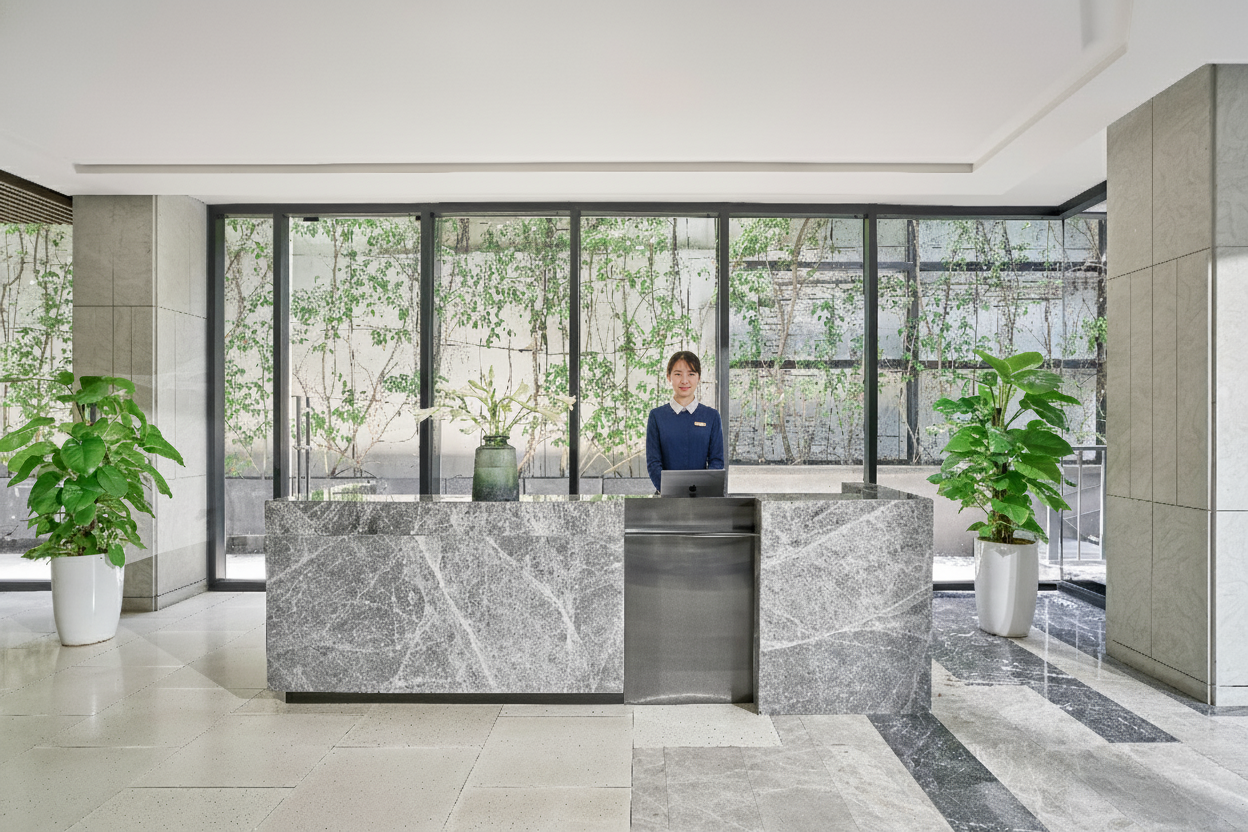
- Private branded suite as enterprise HQ: Professional reception, boardrooms with video conferencing, premium design.
- Result: Investors see a mature company ready for the next level.
What You Should Know
What is the difference between a shared office and a hybrid office?
A shared office is a physical location where multiple companies work. A hybrid office is a strategy where a single company combines remote work with a physical office presence, often utilizing shared spaces to reduce costs.
Is a private coworking space suitable for large teams (50+)?
Yes. Modern private coworking spaces offer “Enterprise Suites” – entire floors or secured wings dedicated to a single company. These offer the privacy and branding of a traditional office with the flexibility of a coworking lease.
How does a flexible office save money during scaling?
It eliminates the “buffer tax.” In traditional leases, companies rent 30% more space than they need to accommodate future growth. In flexible offices, you only pay for the space you need today, adding more space only when you actually hire.
Can I brand my space in a coworking space?
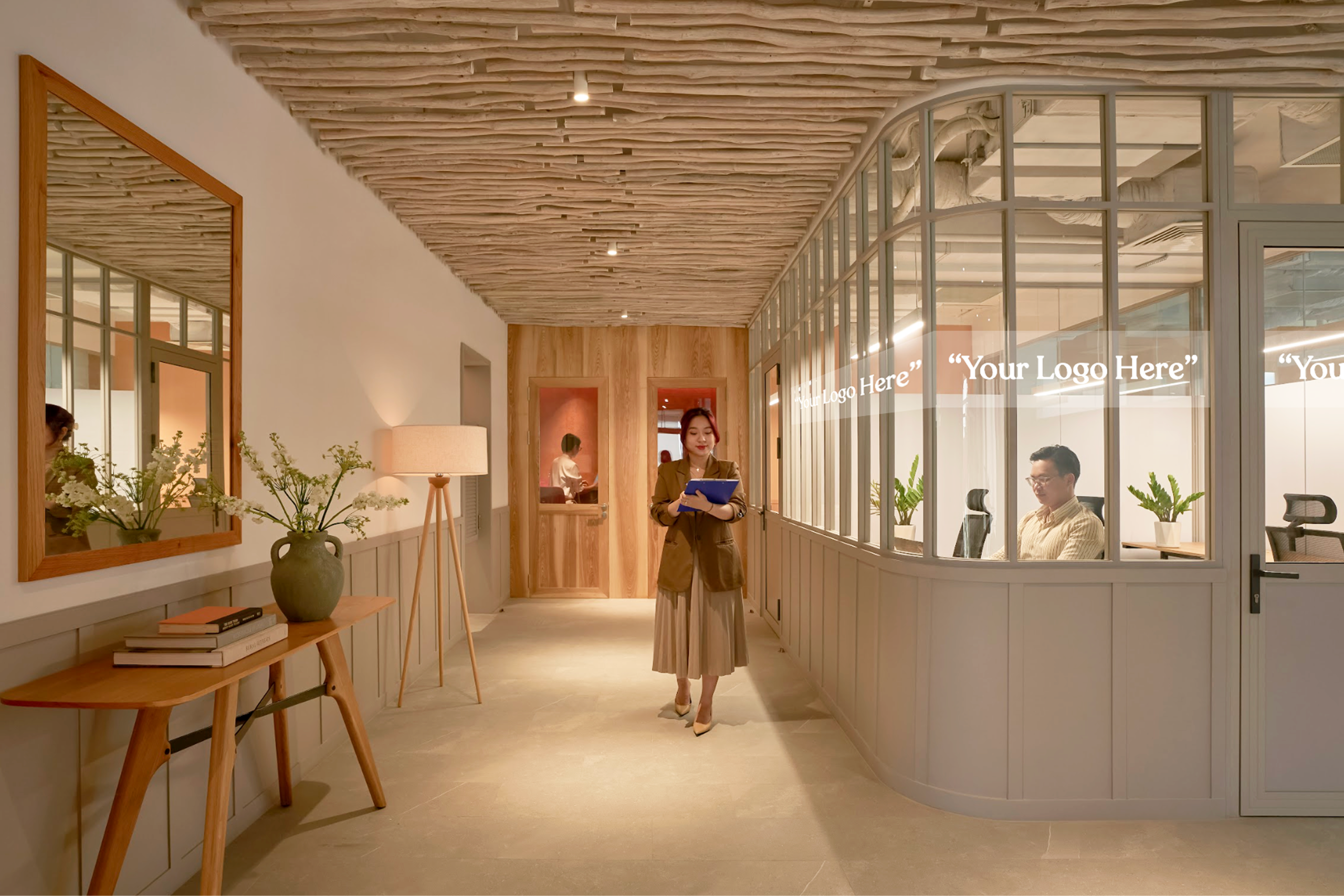
Yes. Enterprise clients can typically install custom signage on doors, walls within their private suite, ensuring the office feels like their HQ, not a generic rental.
Conclusion: Future-Proof Your Growth
The companies that win in 2026 won’t be the ones with the biggest corner offices; they will be the ones with the most agile operating models.
By shifting from a static real estate mindset to a dynamic flexible office strategy, you eliminate the friction of growth. You transform your office from a fixed liability into a scalable asset.
Ready to stop stressing about square meters and start focusing on strategy?
- Book a Tour → Experience how Dreamplex helps enterprises reduce cost per employee while enhancing daily performance.
- Join Our Leadership Roundtable → “AI Teams, Human Workplaces: The New Balancing Act.” Learn how Vietnam’s top leaders are designing offices that scale with technology — and still put people first.
Contact Dreamplex for a free consultation and explore special offers this December:
- Hotline: +84 706 023 545
- Email: sales@dreamplex.co
Dreamplex – Creating workspace that grows with your business
Private when you need focus. Open when you need energy. Human, always.
We create “A Better Day at Work” that perfectly meets the needs of fast-growing companies that understand that their young employees expect more from their workplace.
Well-designed private, branded offices, 5-star hospitality-level care, and a savvy c help those companies attract, engage, and retain Millennial and GenZ talent in Vietnam.
Dreamplex has 5 locations in Ho Chi Minh City, 1 in Hanoi, and looks to expand further in 2026 to create a better workplace for even more people-centric companies and their employees. Companies like Tiki, AIA, Sky Mavis, Samsung, and more trusted Dreamplex to offer the best office for their teams.
WE CREATE A BETTER DAY AT WORK.
