


The Silent Dealbreaker: Why Your Office is Winning (or Losing) the War for Talent
For modern leaders, the search for the perfect talent attraction strategy is no longer just about competitive salary bands or stock options – it’s about the tangible ecosystem of work. In a market where 57% of Gen Z professionals expect to change jobs within the year if their needs aren’t met, the prestige of the corner office has lost its power. Today, the battlefield is the “experience economy,” and your office is the frontline.
If your workspace doesn’t signal innovation, connection, and genuine care within the first five seconds of an interview, you’ve likely already lost the candidate before the first question is even asked.
The “Place” Before Paycheck: How Workspace Strategy Drives Talent Attraction
The rules of engagement have fundamentally shifted. We are currently witnessing a “Great Re-evaluation,” a cultural pivot where professionals are prioritizing where and how they work over simple salary increments. When analyzing the ROI of a comprehensive talent attraction campaign, C-level executives are finding that flexibility and environment often outweigh fixed assets in the eyes of top-tier candidates.
This shift isn’t just aesthetic; it’s structural. The office is no longer a utility or a container for desks; it is a cultural beacon. For the ambitious Gen Z creative or the seasoned Operations Director, the workspace serves as a “talent filter.” It answers the silent, nagging questions that every applicant has: Does this company invest in its people? Is this a place where I can grow? Is the technology here an enabler or a barrier?
Companies that understand this are seeing offer acceptance rates soar. Conversely, those sticking to traditional, rigid models are watching their hiring cost spiral out of control as candidates ghost them for competitors who offer a more dynamic “work-life integration.”
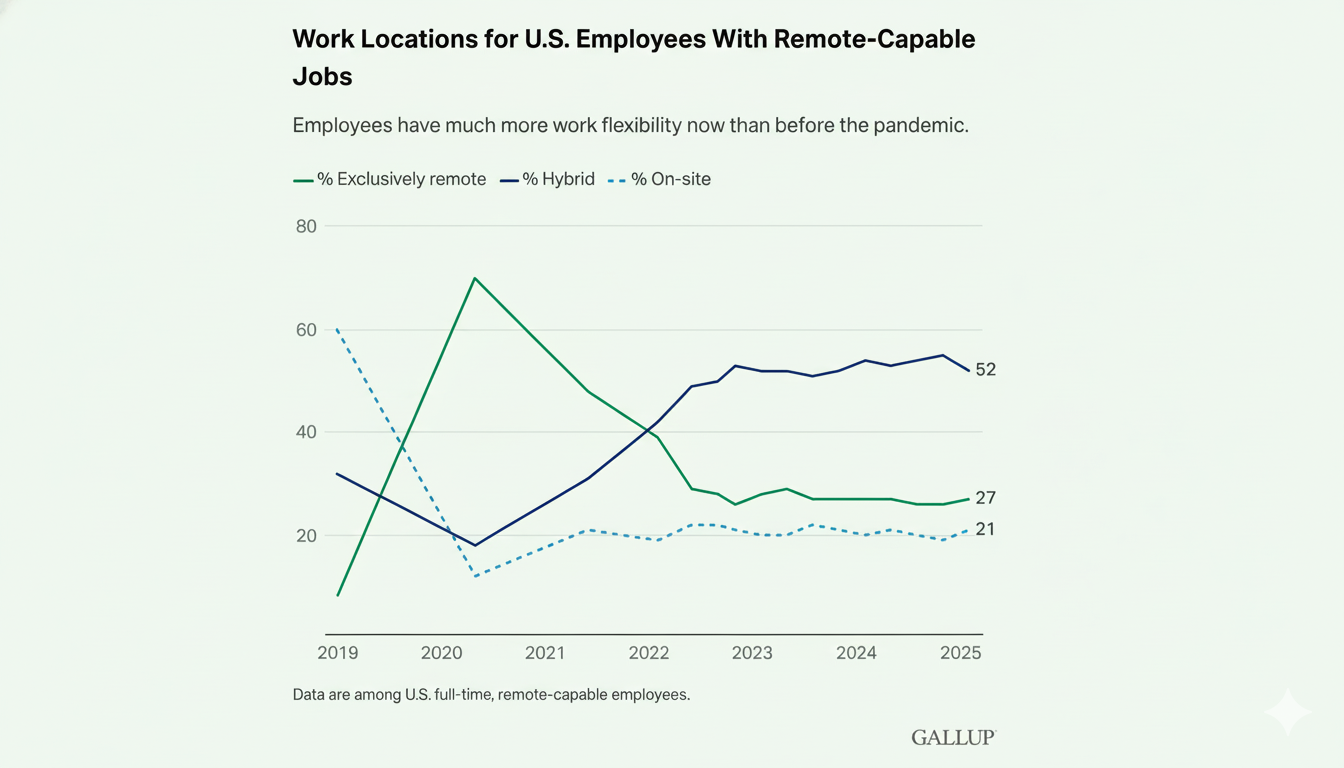
Data Insight: The Hybrid Mandate
As the chart below demonstrates, the demand for hybrid-ready environments is not a fad – it is the baseline expectation for the modern workforce.
Beyond Aesthetics: The Impact of Office Design on Employee Retention
Beyond the balance sheet, a workspace must trigger specific psychological responses to be effective. The architecture of a room dictates the architecture of the mind. When a high-potential candidate walks into a Dreamplex location, they aren’t just looking at the lighting or the furniture; they are unconsciously evaluating four critical pillars of their future work life.
1. A Sense of Pride (The “Instagram” Test)
“I want to work here.” This is the immediate reaction you need. In an era of personal branding, where an employee works says something about who they are. When a candidate steps into a private office or a beautifully designed lounge, they are projecting their future identity onto the space. Does this lobby look like success? Does this meeting room command respect? Premium environments signal that you are a serious player. In the competitive game of talent attraction, pride is a currency that buys loyalty before the contract is even signed.
2. A Sense of Belonging (The Community Factor)
“I fit here.” The isolation of the remote-work era has created a deep hunger for genuine connection. Companies with flexible work policies and community-centric designs see a 25% increase in retention. But belonging goes deeper than policy. It’s about seeing a coworking space that buzzes with energy, diversity, and connection. It’s about the “vibe” that tells a candidate they are entering a community, not just a factory of silent desks. They are looking for “collisions” – those serendipitous moments in the pantry or lounge where ideas are exchanged.
3. A Sense of Growth (The Learning Environment)
“I can do my best here.” Stagnant offices suggest stagnant careers. If your office looks like it hasn’t changed since 2020, candidates assume your business model hasn’t either. Conversely, spaces designed for continuous learning – with breakout areas, event spaces, and tech-enabled meeting rooms – communicate opportunity. They signal that the company values collaboration and upskilling, which is a primary driver for young talent.
4. A Sense of Energy (The Motivation Metric)
“This place motivates me.” You cannot fake momentum. A disorganized, poorly lit, or silent office suggests a sinking ship. A space alive with movement, music, and collaboration suggests a rocket ship. The ambient energy of a workspace acts as a caffeine boost for productivity; candidates can sense if the current employees are energized or exhausted simply by walking through the door.
The ROI of Flexibility: Comparing Traditional Leases vs. Serviced Offices
For the pragmatic Operations Director or HR Leader, the investment in a premium workspace is often scrutinized strictly against the P&L. However, this is a dangerous oversimplification. When you factor in the turnover rate, the math changes drastically.
Consider the “hidden tax” of a bad office. If a poor environment leads to high churn, the cost of replacing an employee (often 3-5 months of their salary in recruitment fees, onboarding time, and lost productivity) far exceeds the premium of a serviced office. By shifting from a CAPEX-heavy traditional lease to a flexible office for rent model, companies can reinvest capital into what matters most: the employee experience.
The Real Cost of Losing Talent
Forward leaders use tools like The 2026 Office Budgeting Tool to calculate the true cost of occupancy versus the cost of attrition.
Cost Component | Traditional Office (Low Experience) | Serviced Office (High Experience) | Impact on Talent |
Recruitment & Training | High (Frequent turnover cycles) | Low (Higher retention rates) | Talent attraction becomes a retention engine |
Productivity loss | High (Distractions, poor tech, friction) | Low (Optimized flows, seamless IT) | Better output per headcount |
Brand perception | "Outdated / Rigid / Slow" | "Modern / Agile / Global" | Attracts top-tier candidates naturally |
Total Cost of Ownership | High (Hidden churn costs) | Optimized | Higher ROI on human capital |
Source: Talentnet 2026 Turnover Report
The Interview Audit: What Gen Z Talent Looks For in a Modern Workplace
Candidates are constantly auditing your workspace, even when you think they are focused on the interview questions. They are gathering data points on operational efficiency and culture through observation. Research shows that 77% of job seekers would consider a company’s culture before applying for a job.
Here is what they are looking for:
- The “friction” test (meeting room quality): Do the screens work immediately? Is the furniture ergonomic? Beautiful, premium meeting rooms signal professionalism and respect for time. Cluttered, tech-deficient rooms where IT needs to be called to fix a projector signal operational chaos and frustration.
- The “vibe” check (energy & interactions): Do current employees look stressed, hunched over, or engaged? 32.4% of employees cite a negative environment as a top reason for leaving. Candidates can sense “burnout” in the air – it smells like stale coffee and silence.
- The “details” audit (cleanliness & order): A disorganized office suggests a lack of systems. A pristine, hospitality-led environment suggests a company that handles details with precision – a massive green flag for high-level talent attraction. If the pantry is dirty, the candidate assumes the management is messy.
Why Managed Office Solutions Are the Strategic Choice for HR Leaders
For HR Leaders and Operations Directors, the burden of creating this “perfect” environment can be overwhelming. Managing vendors, cleaning staff, security, internet redundancies, and maintenance issues distracts from your core mission: building culture and driving strategy.
This is why Dreamplex is the right choice for the modern, people-first organization. We bridge the gap between the isolation of home and the rigidity of traditional leases.
- Hassle-free excellence (outsourced ops): We handle the hospitality, the IT infrastructure, and the facilities management. Your team simply plugs in and starts working. This allows HR to focus on talent retention strategies rather than fixing the coffee machine or negotiating with internet providers.
- Enterprise-grade flexibility: Whether you need a private office for 20 or a custom-branded floor for 100, our solutions grow with your headcount. This eliminates the risk of long-term leases that no longer fit your needs, allowing you to scale up (or down) as the market dictates.
- The “employee experience” included: We don’t just rent desks; we provide a curated experience. From weekly wellness events to professional workshops and networking hours, Dreamplex acts as an extension of your HR department. We provide the “perks” that drive talent attraction success without adding a single hour to your workload.
In 2026, your office is your handshake. It is the first impression that lasts the longest. Make sure it’s a firm, confident one. By partnering with Dreamplex, you aren’t just renting space; you are securing a competitive advantage in the war for talent.
People Also Ask these questions
How does workspace design impact employee retention rates?
Workspace design impacts employee retention by directly influencing job satisfaction and well-being. Studies indicate that employees in well-designed, flexible offices with natural light and collaborative zones are 25% less likely to leave their jobs compared to those in traditional, rigid cubicle environments. A premium workspace signals that the company values its staff, which fosters loyalty and reduces costly turnover.
Is a serviced office more cost-effective than a traditional lease for growing companies?
Yes, a serviced office is often more cost-effective for growing companies when analyzing the Total Cost of Ownership (TCO). While the monthly rent might appear higher on paper, a serviced office eliminates CAPEX (renovation, furniture) and consolidates operational costs like internet, cleaning, security, and utilities into one predictable fee. This allows businesses to convert capital expenditures into operational expenditures, freeing up cash flow for talent and R&D.
What are the key features Gen Z talent looks for in an office?
Gen Z talent prioritizes “experience” and “community” over prestige. They look for hybrid-ready technology (seamless video conferencing), social spaces that foster connection, sustainability initiatives, and aesthetic quality that aligns with their personal brand. They reject sterile, silent offices in favor of vibrant environments that offer a clear distinction between focused work zones and collaborative break areas.
Why should HR leaders prioritize flexible workspace solutions in 2026?
HR leaders should prioritize flexible workspace solutions because they reduce administrative burden and enhance the employee value proposition. By outsourcing facility management to a provider like Dreamplex, HR teams can focus on culture and strategy rather than operations. Furthermore, flexible terms allow companies to scale their real estate footprint up or down based on headcount, mitigating the financial risk of long-term leases in a volatile market.
Conclusion: Don’t Let Your Office Be the Barrier
As we navigate 2026, the barrier to growth for many Vietnamese companies will not be a lack of capital or market demand. It will be the inability to attract the right people.
Do not let old walls, bad lighting, and a lack of service stand between you and the top 1% of talent.
By changing your mindset and viewing the workspace as a strategic “asset” rather than a “cost,” you directly address the core challenges of talent recruitment. You create a space that fosters pride, belonging, and growth. You reduce the friction that leads to burnout. And ultimately, you build a company that is sustainable, profitable, and vibrant.
The math is simple: A better office leads to better retention, a lower turnover rate, and a significantly reduced hiring cost.
Ready to Recruit Talents and Develop Your Team for 2026?
- Book a Tour → Experience how Dreamplex helps enterprises reduce cost per employee while enhancing daily performance.
- Join Our Leadership Roundtable → “AI Teams, Human Workplaces: The New Balancing Act.” Learn how Vietnam’s top leaders are designing offices that scale with technology — and still put people first
Contact Dreamplex for a free consultation and explore special offers this month:
- Hotline: +84 706 023 545
- Email: sales@dreamplex.co
Dreamplex – Creating workspace that grows with your business
Private when you need focus. Open when you need energy. Human, always.
We create “A Better Day at Work” that perfectly meets the needs of fast-growing companies that understand that their young employees expect more from their workplace.
Well-designed private, branded offices, 5-star hospitality-level care, and a savvy c help those companies attract, engage, and retain Millennial and GenZ talent in Vietnam.
Dreamplex has 5 locations in Ho Chi Minh City, 1 in Hanoi, and looks to expand further in 2026 to create a better workplace for even more people-centric companies and their employees. Companies like Tiki, AIA, Sky Mavis, Samsung, and more trusted Dreamplex to offer the best office for their teams.
WE CREATE A BETTER DAY AT WORK.
