

FDI Vietnam Singapore Companies: The 2026 Policy Shift and What It Means for Your Office Decision
FDI Vietnam Singapore companies registered in the first seven months of 2026 made up 27.3% of the national total, first among all source markets, according to the Foreign Investment Agency. The Law on Investment 2025 took effect in March, and Decree 96/2026 followed weeks later. Ho Chi Minh City opened its International Financial Center in February, with a 10% corporate tax tier, according to Decree 324/2025. The gain for most Singapore entrants is licensing speed, and speed is an office question.
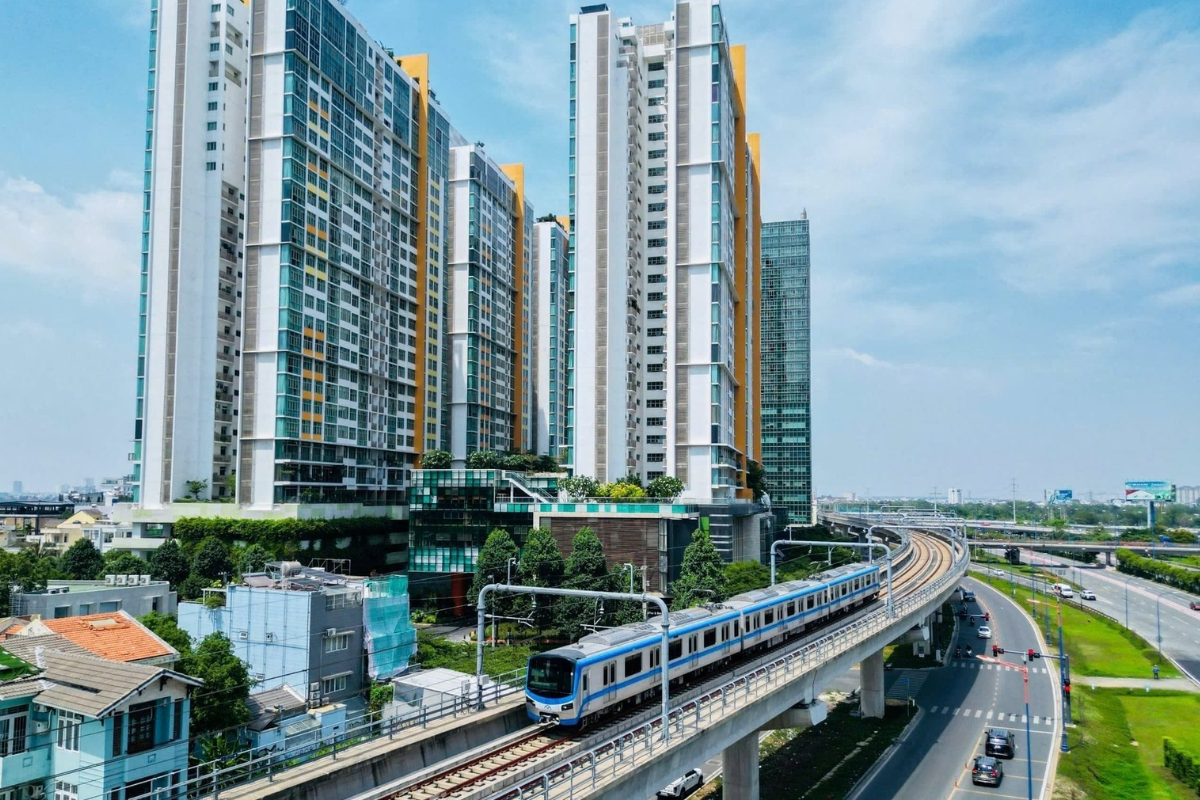
The FDI Vietnam Singapore companies committed between January and July 2026 reached USD 10.39 billion, according to the Foreign Investment Agency. That is 27.3% of all foreign capital registered in Vietnam over the period, according to the same agency. Total registered FDI hit USD 38.05 billion over the seven months, up 58% year on year, according to the agency. It put Ho Chi Minh City ahead of every other province or city, at more than USD 3.6 billion across 1,235 new projects.
The volume is the easy part. The rules underneath it changed in March. That change rewards a specific kind of project, and it moves the timeline for everyone else.
FDI Vietnam Singapore companies: what changed on March 1, 2026
The Law on Investment 2025 took effect on March 1, 2026. Decree 96/2026/ND-CP followed on March 31 and replaced Decree 31/2021. Together they move Vietnam away from broad pre-approval control. What replaces it is simplified registration, stronger post-licensing supervision and tighter targeting of incentives.
Two provisions matter for a Singapore parent planning entry.
The green lane now covers more ground
The first is the special investment procedure, known in practice as the green lane. Projects sited in industrial parks, export processing zones, hi-tech parks, digital technology zones and free trade zones now qualify regardless of sector. Carve-outs remain for major infrastructure such as airports and seaports. Qualifying projects register instead of seeking investment policy approval, and skip technology assessment, environmental impact assessment, construction permits and fire safety approval.
Incentives follow the project, not the sector
The second is how incentives are earned. Decree 96 ties benefits to project characteristics rather than sector membership – capital scale, disbursement progress, technology contribution, innovation content. Semiconductors and chip manufacturing sit at the top of the priority list, alongside artificial intelligence, big data and digital technology. High-tech R&D and strategic digital infrastructure follow.
A third date landed quietly. The provisions covering Vietnam’s list of conditional business lines took effect on July 1, 2026, four months after the law itself. That list decides which activities a foreign-invested company may register, and on what conditions. Check your intended business lines against the current version before the entity structure is signed off in Singapore, because a late change to scope reopens the filing.
Read the two together and the direction is clear. Vietnam is buying quality of capital, not volume.
For the FDI Vietnam Singapore companies place into commercial, technology and professional services work, the benefit is a shorter licensing path rather than a lower tax rate. A 20-person product team will not clear the capital thresholds behind the headline rates. Neither will a regional sales entity.
Both will clear the market faster than the same entity did two years ago, which pulls the office requirement forward in the schedule. Plan the space around the licensing date, not the other way around.
Where the FDI Vietnam Singapore companies commit is going
Digital technology and energy infrastructure drove the rise in registered capital through July 2026. The geography splits along sector lines, and that split answers the office question before anyone asks it.
Manufacturing capital goes to the provinces. Thai Nguyen led the country with nearly USD 5.8 billion in newly registered investment over the seven months, according to the Foreign Investment Agency. Nghe An, Hai Phong, Bac Ninh and Dong Nai followed. That money buys industrial land and factory shells.
Commercial, financial and professional services capital stays in the cities, and mostly in Ho Chi Minh City. This layer needs a registered address, a meeting room that holds up in front of a client, and room for five to fifty people. Both governments point the same way through the Green–Digital Economic Partnership, which covers clean energy, carbon credits, data centers and green finance. Vietnam and Singapore elevated ties to a Comprehensive Strategic Partnership in March 2025, Singapore’s first with an ASEAN member.
Two-way trade reached close to USD 12 billion in 2025. The two sides plan to raise the number of Vietnam–Singapore Industrial Parks to 30 during 2026, the model’s thirtieth year. The FDI Vietnam Singapore companies direct into the services layer rarely starts large. It starts with a country manager, a business development hire and a finance lead, and it grows on what those three produce in year one.
Ho Chi Minh City’s financial center rewrites the address question
The Vietnam International Financial Center in Ho Chi Minh City launched on February 11, 2026, under National Assembly Resolution 222/2025/QH15 and Decree 323/2025/ND-CP. Its footprint covers 898 hectares across Ben Thanh Ward, Saigon Ward and most of Thu Thiem Ward. Ho Chi Minh City rose 11 places to 84th of 120 centers in the 2026 Global Financial Centres Index, third in Southeast Asia.
Decree 324/2025/ND-CP sets the tax terms for members. The table compares the two member tiers against Vietnam’s standard corporate rate.
Project type (from 2026) | CIT rate & duration | Tax holiday |
New project in a priority sector inside VIFC-HCMC | 10% for 30 years | Exemption up to 4 years, then 50% reduction up to 9 years |
New project outside priority sectors inside VIFC-HCMC | 15% for 15 years | Exemption up to 2 years, then 50% reduction up to 4 years |
Standard corporate income tax outside incentive regimes | 20%, no fixed term | None |
Membership is narrow by design. Eligibility runs to financial institutions, investment funds and Fortune 500 companies or their direct parents. Most Singapore SMEs entering Vietnam will not be members. The FDI Vietnam Singapore companies bring in through ordinary commercial channels sits outside the regime entirely.
The center still moves something for everyone. It pulls financial and professional demand into the central wards. It also raises what a central address signals to a Vietnamese counterparty. Watch the vocabulary while you search, because since the 2025 administrative merger the CBD is defined at ward level, while brokers and listings still call the same buildings District 1.
What the office market looks like underneath the headline numbers
Grade A vacancy in Ho Chi Minh City sat at 16.7% in Q2 2026, with Grade B at 12.5%, according to CBRE. JLL put CBD Grade A gross asking rents at USD 64.7 per square meter per month in Q1 2026. Grade B stood at USD 33.6 on the same count.
Those figures describe a market with room in it, and a price on that room. A Grade A floor is available. It also carries a three to five year lease, fit-out capital before anyone sits down, and service charges billed on top. The facilities burden lands on the first person you hire.
Tenants in the market have already shifted how they read those numbers. Leasing decisions in Ho Chi Minh City now turn on total occupancy cost, building quality and long-term space efficiency rather than a headline rent comparison. The headline rate is the smallest variable in the calculation, and the one most often quoted back to a regional head office.

A serviced private office reverses the order. One monthly invoice covers the registered address, furnished workstations, business internet, power, cleaning and reception. Meeting rooms come with it. The term starts at one month, so the Vietnam footprint tracks headcount instead of predicting it.
Singapore finance teams already run this model at home. The internal case rarely needs explaining, which matters when the request lands with a regional CFO who has never visited Ho Chi Minh City.
One sequencing detail catches Singapore teams every year. The registered business address is required before the incorporation filing goes in, not after. A virtual office with registration capability holds that place while the team is still in Singapore. It converts to a private office when the first hires start.
The first 24 months decide more than the incentive schedule
The honest reading of the 2026 reforms is that most Singapore service and technology entrants gain time, not tax. That lowest tier belongs to a small group of qualifying members. The green lane belongs to projects inside designated zones. Everyone else gets a licensing process that no longer waits on approvals it used to wait months for.
That turns the first 24 months into a staffing and credibility problem rather than a real estate one. The country manager’s job is revenue and relationships, not electricity contracts. The address has to hold up in a meeting with a Vietnamese bank or a state-linked partner. The space has to absorb a team that triples without forcing a move.
The FDI Vietnam Singapore companies bring into the country is arriving faster than the teams built to run it. That gap is where the first year is won or lost.
Next steps when searching a Vietnam Office Space for a Singapore Company
- Explore Dreamplex locations in Ho Chi Minh City and Hanoi
- Compare serviced office options at Dreamplex
- Check out step-by-step instructions of opening an office in Vietnam for foreign companies
Ready to Expand Your Business to Vietnam in 2026?
Dreamplex runs five locations in Ho Chi Minh City and one in Hanoi. Private offices take 2 to 150 people, with a registered business address included and terms from one month. Dreamplex Nguyen Trung Ngan sits in the central District 1 core, minutes from the financial center footprint. Dreamplex Tran Quang Khai residents the Tan Dinh are, neighboring Binh Thanh, Phu Nhuan without the traffic bottlenecks. Dreamplex Private Tran Quoc Toan has the most executive vibe with private whole floors and dedicated lift access, for teams arriving at 30 people or more.
- Book a Tour → Experience how Dreamplex helps enterprises reduce cost per employee while enhancing daily performance.
- Join Our Leadership Roundtable → “AI Teams, Human Workplaces: The New Balancing Act.” Learn how Vietnam’s top leaders are designing offices that scale with technology — and still put people first
Book a tour before the entity paperwork is filed. The address goes on the filing, and the filing sets the clock. Grab a free consultation and explore special offers this month:
- Hotline: +84 909 90 34 99
- Email: sales@dreamplex.co
Dreamplex – Creating workspace that grows with your business
Private when you need focus. Open when you need energy. Human, always.
We create “A Better Day at Work” that perfectly meets the needs of fast-growing companies that understand that their young employees expect more from their workplace.
Well-designed private, branded offices, 5-star hospitality-level care, and a savvy c help those companies attract, engage, and retain Millennial and GenZ talent in Vietnam.
Dreamplex has 5 locations in Ho Chi Minh City, 1 in Hanoi, and looks to expand further in 2026 to create a better workplace for even more people-centric companies and their employees. Companies like Tiki, AIA, Sky Mavis, Samsung, and more trusted Dreamplex to offer the best office for their teams.
WE CREATE A BETTER DAY AT WORK.
