


Build Operations That Scale Automatically: The 2026 Guide to Flexible Office for Enterprise
Companies today scale faster than ever, but their internal operations often fail to keep pace. Manual workflows — from onboarding to facility management — drain time and create friction exactly when momentum matters most. Leaders want teams focused on growth, not fixing Wi-Fi or coordinating vendors. The workspace, often viewed as a static asset, has become the hidden bottleneck. As headcount doubles, operational complexity multiplies exponentially, creating coordination overhead that slows execution. This is when a flexible office for enterprise model comes in handy.

Why Operations Break as Companies Grow
The jump from 10 to 30 to 100 people multiplies complexity, not linearly but exponentially. More tools, more devices, more hybrid schedules, and more meetings all create coordination overhead that traditional office models cannot handle.
Common symptoms of this operational drag appear quickly:
- IT friction: Technical issues delay onboarding for new hires.
- Space conflict: Meeting room shortages disrupt critical client presentations.
- Admin overload: Facilities management consumes valuable leadership bandwidth.
- Staff burnout: Office managers face exhaustion from handling escalating demands.
- Distraction: Teams self-manage logistics instead of focusing on “real work.”
Research shows that personalized work environments can boost productivity by up to 28% through adaptive infrastructure. Yet, most scaling companies still operate with manual, reactive systems. When growth accelerates — particularly during Series A and Series B expansion — internal ops collapse unless they are designed to scale automatically.
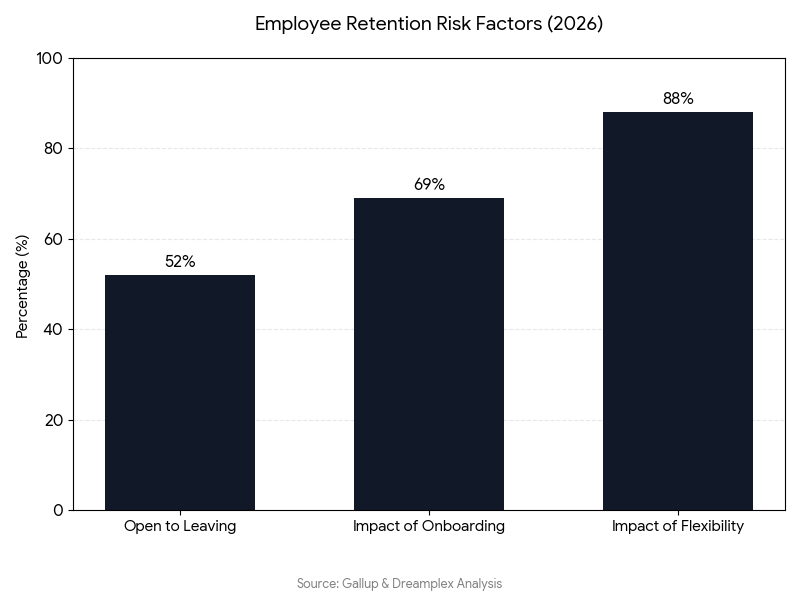
According to the EY Future Workplace Index, 51% of companies are now investing in high-tech office environments and 63% in digital collaboration tools, recognizing that operational infrastructure directly impacts execution speed. The cost of ignoring this is substantial: replacing an employee can cost up to 200% of their annual salary, with 42% of turnover being preventable — often driven by a poor operational experience.
The 2026 Shift: Decentralization & Hub-and-Spoke
The flexible office for enterprise sector shifts as teams demand agility. Hybrid work has fundamentally increased the unpredictability of space usage. Teams no longer follow fixed schedules, creating dynamic demands that static office infrastructure cannot accommodate efficiently.
Several factors compound this complexity in the current market:
Multi-Site Coordination & Hub-and-Spoke
More companies now operate across Ho Chi Minh City, Hanoi, and regional hubs. This hub-and-spoke model — where a central HQ is supported by satellite offices — requires synchronized systems and consistent standards across locations. A flexible office for enterprise solution bridges these gaps, allowing teams to move between locations without losing connectivity or culture.
Specialized Role Requirements
Engineers need different equipment than designers. Sales teams need client-ready presentation spaces, while product teams require collaborative war rooms. Each function multiplies infrastructure needs, making a standard serviced office setup insufficient unless it is highly adaptable.
Speed Expectations
Modern teams expect everything to “just work.” A single day of IT downtime or a poorly equipped meeting room can derail client relationships or delay product launches. In the context of office cost optimization 2026, downtime is a hidden expense that agile businesses cannot afford.
Rising Employee Experience Standards
Employees who feel valued are 63% less likely to look for new jobs, and 88% of leaders agree that flexible working positively impacts retention. This translates into operational pressure: seamless access, natural workflow, and hospitality-level service are no longer nice-to-haves — they are retention strategies.
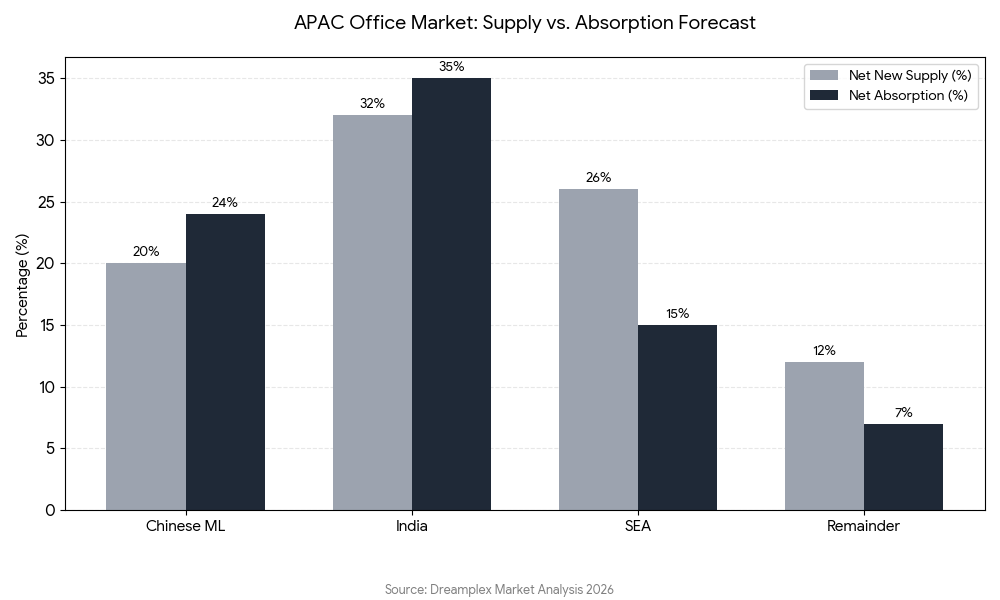
The Asia-Pacific office sector reflects this shift. The region is expected to account for over 50% of the global office sector by 2025, including Vietnam’s tech ecosystem, driving demand for infrastructure that supports rapid scaling without operational friction.
Workspace as an Operational Engine
The most significant shift in workplace strategy is treating the office as operational infrastructure — not just a location. Modern workspaces now function as engines that handle scale automatically, removing the administrative burden from leadership teams.
Here is what automated operational infrastructure delivers for the modern flexible office for enterprise:
- Enterprise-grade IT configured: High-speed internet, backup systems, network security, and redundancy are built-in. Teams connect devices and start working immediately without waiting for IT provisioning.
- 24/7 secured access: Automated check-ins, keyless entry, and integrated booking systems eliminate manual access management while maintaining strict security protocols.
- Automated meeting room management: Digital booking systems prevent double-bookings, integrate with calendars, and ensure rooms are equipped with the right technology for each meeting type.
- Reception & Admin support: Professional front-desk teams handle guest management, mail, packages, and visitor coordination—services that would otherwise require dedicated staff.
- Invisible facility management: Housekeeping, utilities, and maintenance are fully handled. There are no coordination meetings, no vendor management, and no unexpected breakdowns disrupting the workflow.
- Turnkey work zones: Fully furnished, pre-configured work zones allow teams to move in and start working immediately. There is no capital expenditure on furniture and no months lost to fit-out delays.
- Integrated event space: Client presentations, town halls, and training sessions happen seamlessly without separate venue coordination.
- On-site IT helpdesk: Technical issues resolve immediately, not through ticket queues or outsourced support centers.
This infrastructure reduces the hidden cost of running an office by up to 40%. More importantly, it removes operational noise so teams can run faster. As explored in Workplaces That Breathe: Boost Productivity & Retain Talent, the combination of flexibility and operational excellence creates environments where teams focus on execution, not logistics.
The Dreamplex Model: “Zero-Friction” Workspace
Dreamplex has engineered its infrastructure specifically to solve operational scalability challenges for Vietnam’s fastest-growing tech companies. The Dreamplex workspace model delivers three core outcomes:
1. 10x Growth → Ready-to-Scale Space
Companies can expand from 20 to 80 people with just 30-90 days’ notice. There is no downtime, no renovation delays, and no operational friction. The space adapts to headcount in real-time, eliminating the growth bottleneck that traditional leases create.
2. 10x Productivity → Seamless Operations
Every operational element runs automatically. IT infrastructure, meeting room technology, administrative support, facilities management, and community programs operate as integrated systems—not separate vendors requiring coordination.
3. 10x Innovation → Constant Upgrades
Environments refresh regularly with new technology, upgraded amenities, and evolving workspace configurations. Teams always operate in modern, well-maintained environments without capital investment or project management overhead.
→ Real impact: A regional tech company recently doubled its headcount from 45 to 90 people over six months without adding a single operations staff member. Their leadership team spent zero hours on facility coordination, vendor management, or IT setup. Every new hire walked into a fully configured flexible office for enterprise on day one, accelerating time-to-productivity.
The workspace becomes part of the operating system, not just a location. As detailed in “Why Investors Trust Companies with Strong Workspaces,” this operational readiness signals to investors that a company can deploy capital efficiently and scale without execution risk.
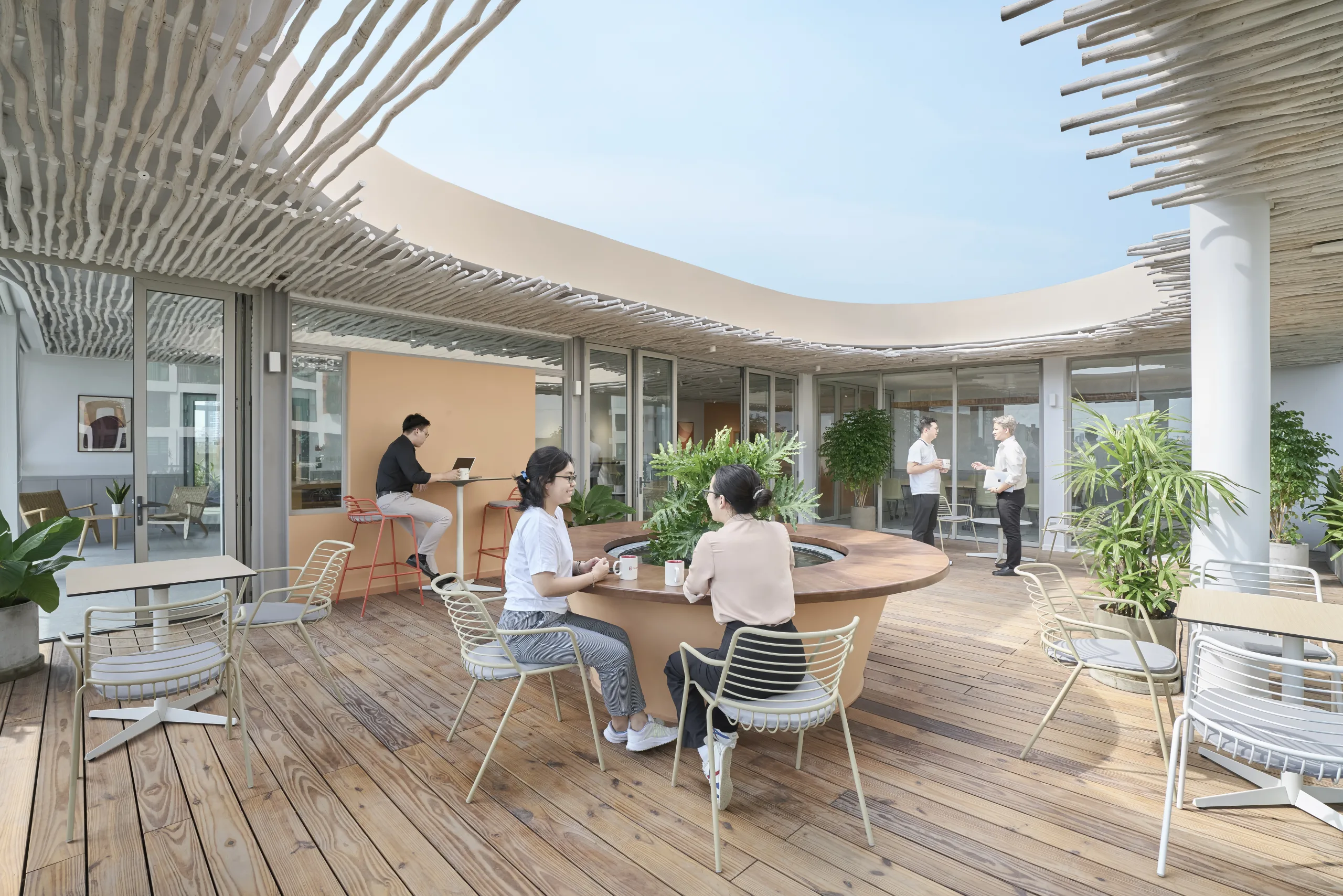
Dreamplex’s hospitality-led operations curate the touchpoints that matter: community programs, events, peer learning sessions, workshops, and wellness activities that make office days culture days.
The Right Choice for Modern Leadership
As you evaluate office cost optimization 2026 strategies, Dreamplex offers specific advantages tailored to your leadership roles:
For CEOs and Country Managers
You need a Global HQ image without the liability. A flexible office for enterprise at Dreamplex ensures your brand is represented by premium design and professional support, satisfying regional investors and partners. You achieve “the right choice” by eliminating the $134K upfront CAPEX risk, allowing you to deploy capital into product and sales instead of concrete and cables.
For HR and Operations Leaders
Your priority is Employee Experience (EX) and risk mitigation. Managing a traditional office involves constant vendor battles and facility headaches. Dreamplex removes this burden. Our serviced office model ensures your team enjoys a hotel-like experience with wellness programs and community events built-in. This hassle-free approach reduces burnout and significantly aids in talent retention.
For Founders and SME Owners
Speed is your currency. You cannot afford to wait six months for a fit-out. Office for rent solutions at Dreamplex offer immediate credibility and agility. You sign today and work tomorrow, scaling from 10 to 50 staff without breaking your lease.
People Also Ask about how flexible offices can boost growth without friction
How does a short-term leasing office benefit scaling startups?
A short-term leasing office allows startups to avoid long-term financial liabilities and rigid contracts. This agility enables companies to scale headcount up or down rapidly based on market conditions, ensuring they only pay for the space they actually need while maintaining professional standards.
Why are “flexibility” and “turnkey solutions” to mitigate risk essential in 2026?
“Flexibility” and “turnkey solutions” to mitigate risk are critical because they convert high upfront CAPEX into manageable OPEX. By utilizing pre-fitted, fully serviced workspaces, companies avoid the sunk costs of renovation and furniture, protecting cash flow and allowing leadership to focus on core business strategy rather than logistics.
What defines a flexible office for enterprise compared to standard coworking?
A flexible office for enterprise offers privacy, branding, and security tailored to large teams, unlike open-plan coworking. It combines the agility of short terms with the infrastructure of a corporate HQ, including dedicated servers, private meeting suites, and customized access controls.
How does office cost optimization 2026 differ from traditional cost-cutting?
Office cost optimization 2026 focuses on total value rather than just rent per square meter. It involves reducing “hidden” operational costs—like IT downtime, admin salaries, and fit-out depreciation—by adopting a serviced model where these expenses are bundled and shared, resulting in lower total cost of occupancy.
Why is a serviced office better for decentralized teams?
A serviced office provides a consistent, high-quality work environment across multiple locations. For decentralized or hub-and-spoke teams, this ensures that employees in satellite offices have the same seamless IT, administrative support, and amenity access as those in the HQ, maintaining culture and productivity.

Build Operations That Scale Automatically
Building operations that scale automatically is no longer optional in Vietnam’s competitive tech landscape. Investment is projected to grow by 83% from 2025 to 2030, and investors increasingly evaluate whether companies can scale smoothly or will face significant operational friction.
Traditional leases require approximately $134,000 in year-one commitment before a single employee sits down. In contrast, flexible office for enterprise solutions convert fixed CAPEX into variable OPEX, freeing capital for talent and innovation. But the operational advantage matters even more: leadership teams reclaim hundreds of hours previously spent building and managing strategy, customer development, and product innovation.
For companies navigating hypergrowth, this infrastructure model eliminates the paralysis of long-term commitments while delivering Grade A environments that keep talent engaged and productive. The workspace breathes with the business, scaling automatically as needs evolve.
Ready to accelerate your growth in 2026?
- Book a Tour → Experience how Dreamplex helps enterprises reduce cost per employee while enhancing daily performance.
- Join Our Leadership Roundtable → “AI Teams, Human Workplaces: The New Balancing Act.” Learn how Vietnam’s top leaders are designing offices that scale with technology — and still put people first.
Contact Dreamplex for a free consultation and explore special offers:
- Hotline: +84 706 023 545
- Email: sales@dreamplex.co
Dreamplex – Creating workspace that grows with your business
Private when you need focus. Open when you need energy. Human, always.
We create “A Better Day at Work” that perfectly meets the needs of fast-growing companies that understand that their young employees expect more from their workplace.
Well-designed private, branded offices, 5-star hospitality-level care, and a savvy c help those companies attract, engage, and retain Millennial and GenZ talent in Vietnam.
Dreamplex has 5 locations in Ho Chi Minh City, 1 in Hanoi, and looks to expand further in 2026 to create a better workplace for even more people-centric companies and their employees. Companies like Tiki, AIA, Sky Mavis, Samsung, and more trusted Dreamplex to offer the best office for their teams.
WE CREATE A BETTER DAY AT WORK.

