


Turning Your Office Into a Talent Magnet: The 2026 Strategy for Talent Recruitment
Executive Summary
Vietnam’s 2025 talent market challenges HR managers with high turnover, escalating costs, and fierce competition. Premium office environments directly address what candidates evaluate most: company culture, growth opportunities, and work-life balance. Companies with strategic workspaces tend to win in the talent recruitment game, reporting 50% lower cost-per-hire, 25% higher retention rates, and significantly faster time-to-fill.
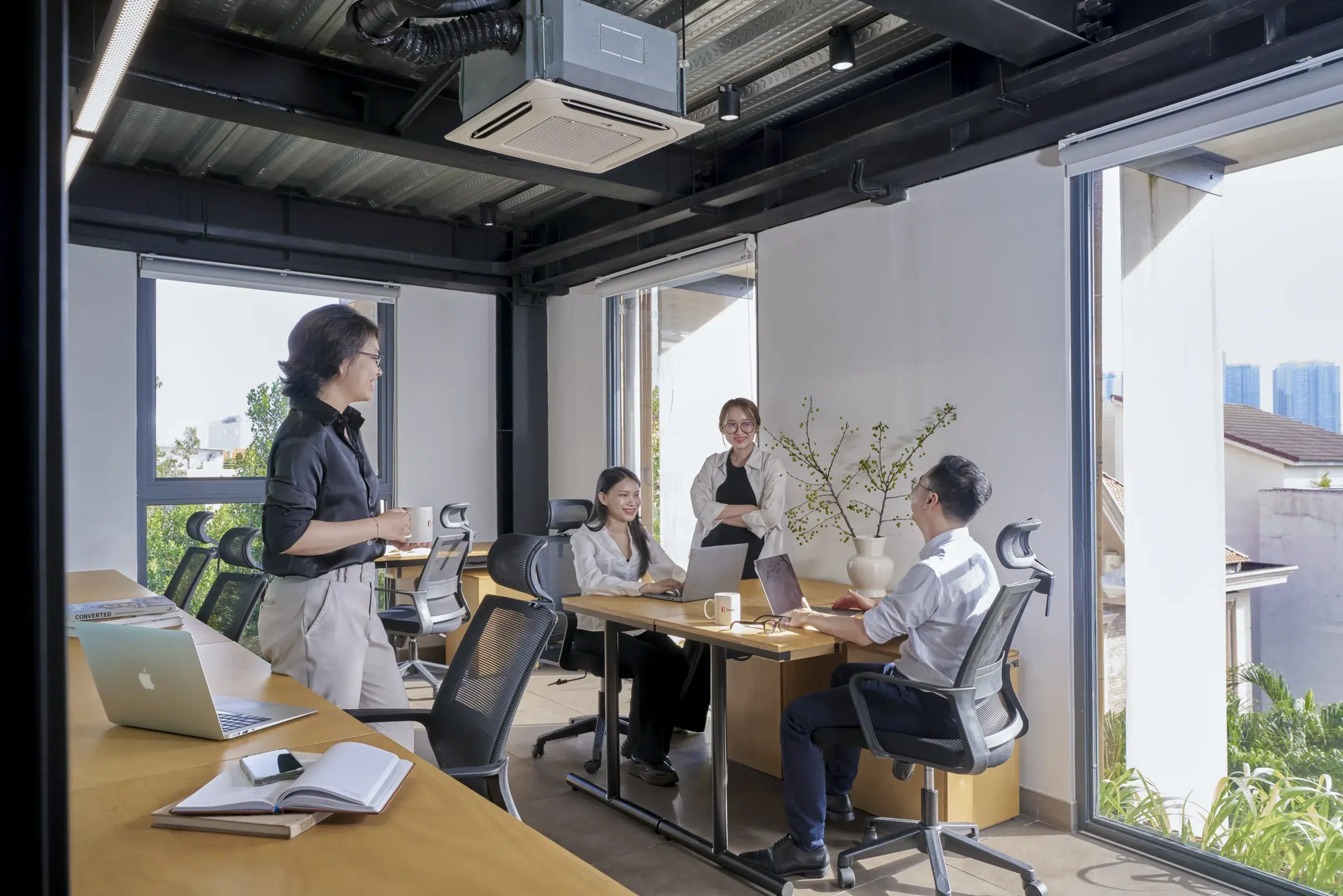
Why Talent Recruitment in Vietnam Has Fundamentally Changed in 2026
It is January 2026. The dust has settled on the chaotic “great resignation” of the early 2020s. We have now entered a more mature, yet more demanding era: the age of the “conscious choice.”
For HR Directors and Operations Managers, the start of the year is no longer just about headcount planning. It is about answering a terrifying question: Why are we struggling with talent recruitment even though we offer competitive salaries?
Workforce priorities have shifted fundamentally:
- 65% of Gen Z prefer hybrid environments
- 57% expect to change jobs within the year
- 34% cite work-life balance as a primary stressor
- 32.4% leave due to toxic work environments
The rules of engagement have changed. The challenge is no longer just filling an empty seat. The challenge is transforming your company into a destination that talent desires — and a place they refuse to leave. In this new landscape, your physical office is not just a container for desks; it is your silent recruiter, your culture builder, and your strongest weapon against a high turnover rate.
The Shift: Why “Where We Work” Matters More Than Salary
To understand the current state of talent recruitment, we must look at the psychological shift in the workforce, particularly among Gen Z and Millennials.
For years, we adapted to hybrid working. We learned to use Zoom, Slack, and Asana fluently. However, this flexibility created an unintended benchmark. Employees today do not compare your office to your competitor’s office. They compare your office to the comfort of their living room or the vibe of their favorite coffee shop.
This is the harsh reality for 2026: Talent chooses a “lifestyle” before they choose a “job.” Candidates subconsciously evaluate four critical factors:
- Pride: “Would I be proud to work here?” Premium environments signal investment in people
- Fit: “Do I see myself in this culture?” Design must align with professional identity
- Growth: “Can I grow here?” Workspace should communicate opportunity
- Energy: “Will this energize me?” Best offices create momentum felt immediately
If your office is noisy, poorly lit, has unstable Wi-Fi, or unmaintained restrooms, candidates will simply choose to work from home. If working from home becomes too isolating, they will crave an office. But if that office is sterile and uninspiring, they will leave the company entirely.
Internal data and market research for 2026 indicate that 57% of Gen Z employees plan to change jobs this year if their environmental expectations are not met. This is not just a preference; it is a demand. Failing to meet this demand creates a massive financial leak in the form of a skyrocketing hiring cost.
The Hidden Financial Drain: Calculating the True Hiring Cost
Many CEOs, like our persona David Pham, focus heavily on the bottom line. They often view office rent as a liability to be minimized. However, smart HR leaders know that a cheap office is expensive in the long run because of its impact on talent recruitment and retention.
When an employee leaves because of a poor work environment, you lose much more than just a person. You trigger a chain reaction of costs.
What is the Real Cost of Employee Turnover?
When you analyze the turnover rate, you must look beyond the exit interview. The financial impact is often invisible until it affects the P&L.
- Direct costs: This includes advertising fees for the vacancy and headhunter commissions, which often amount to two months of the role’s salary.
- Interruption costs: While the seat is empty, productivity drops. Projects stall. The remaining team burns out trying to cover the gap, which risks further turnover.
- Knowledge costs: When a veteran employee leaves, they take institutional memory, process knowledge, and client relationships with them.
Therefore, investing in a superior workspace is not an HR “perk.” It is a defensive financial strategy. By securing a high-quality environment, you are directly protecting your profit margins by lowering the hiring cost.
For those looking to understand the exact financial breakdown of these decisions, using a specialized office budgeting tool can help you model the savings gained by switching from a traditional lease to a flexible model.
How Does Office Design Influence Candidate Psychology?
You have successfully screened a candidate. They are excited on the phone. Then, they come in for an interview, and you never hear from them again. Why?
It is often because your office failed as a “Silent Salesman.” In 2026, the physical environment must trigger four specific psychological drivers to close the deal. This is the core of the “Hospitality-led” approach that distinguishes premium providers like Dreamplex from standard rental spaces.
1. The Need for Pride: “I Want to Check-in Here”
First impressions happen in seven seconds. Imagine a candidate walking into a traditional, aging building. The elevator is slow, the hallway is dim, and the receptionist is either absent or indifferent. The immediate signal to the candidate’s brain is: “This company is struggling.”
Now, contrast that with a hospitality-led experience. The candidate enters a lobby that feels like a 5-star hotel. They are greeted by name with a genuine smile. There is a subtle, pleasant scent in the air and soft background music. The design is modern, bright, and impressive.
In that moment, the candidate thinks: “This is a premium organization. I would be proud to bring my friends or clients here.”
This sense of pride is a critical factor in talent recruitment. It tells the candidate that you value quality. If you want to win the war for talent, your office must be “Instagrammable” and brag-worthy.
2. The Need for Belonging: Breaking Down Silos
A major driver of the turnover rate is loneliness. Traditional offices often isolate teams behind closed doors or high cubicle walls. This creates “silos” where departments rarely interact.
To improve retention, the workspace must engineer serendipity. This happens in shared spaces like a social lounge, where a Sales Executive might bump into a Marketing Manager while grabbing coffee. It happens during community events, from Friday Happy Hours to morning workshops.
When employees feel they are part of a vibrant community rather than just a cog in a machine, their emotional attachment to the company deepens. They feel they belong.
3. The Need for Growth: Signaling Future Success
Top talent — the people you desperately want to hire — fear stagnation. An office filled with old furniture, tangled wires, and outdated equipment screams “stagnation.” It signals that the company is resistant to change.
Conversely, a technology-enabled workspace signals “growth.” When a candidate sees a modern private office equipped with high-end video conferencing tools, ergonomic furniture, and smart access control, they see a company that invests in the future.
Furthermore, access to learning opportunities within the building — such as tech talks, founder showcases, or skill workshops — adds tangible value to their career. They realize they can learn and grow just by coming to work.
4. The Need for Positive Energy: The Vibe Check
You cannot fake “vibe.” A dull office drains creativity. This is known as “creativity drain.” Gen Z is hypersensitive to energy. They need natural light, greenery (biophilic design), and a buzz of activity.
In a closed, traditional office, the energy is limited to your own team. If your team is having a bad month, the office feels depressing. In a shared ecosystem like a coworking space, there is a constant flow of energy from diverse companies, startups, and industries. This external energy helps lift internal morale, keeping the team motivated even during tough times.
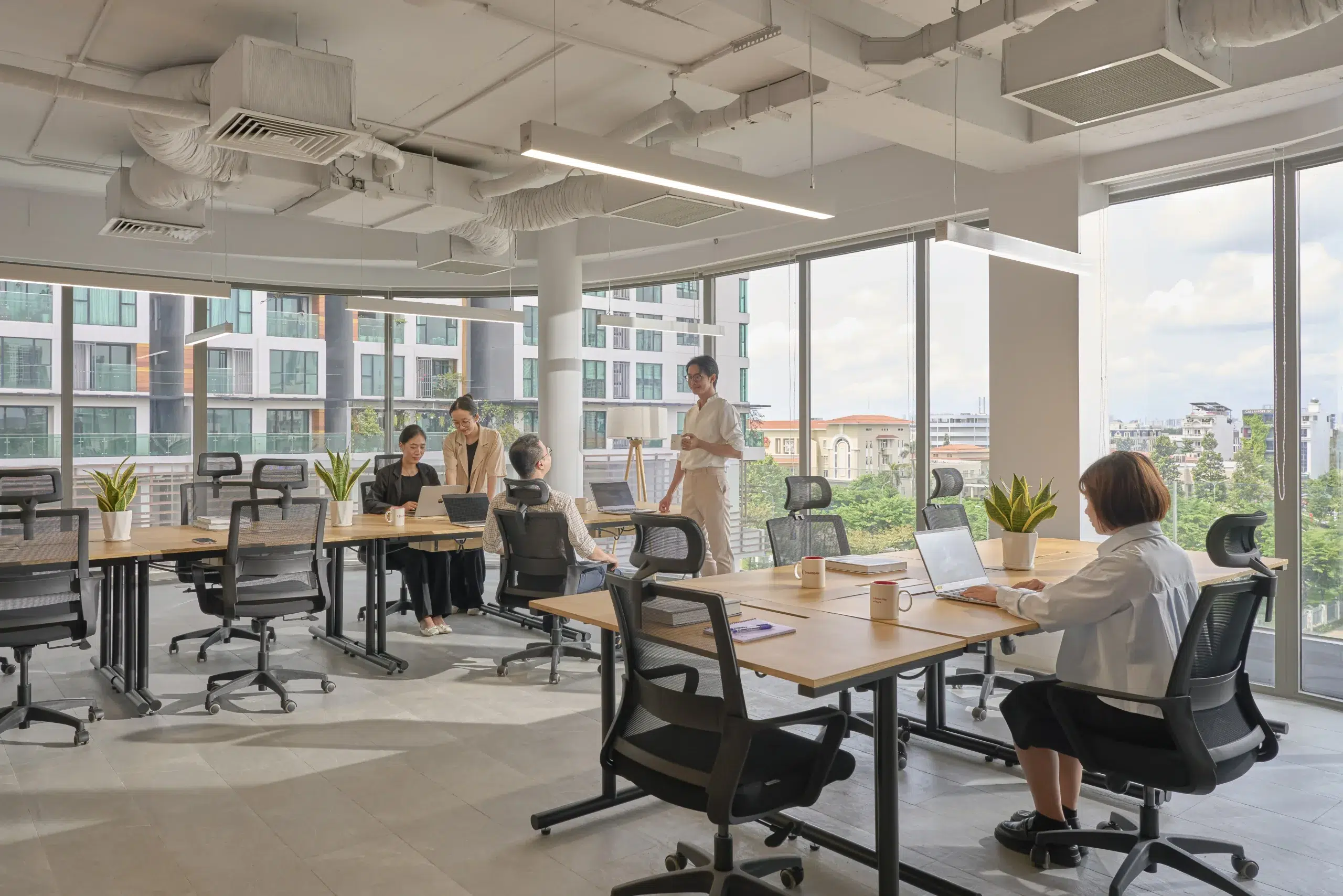
The Economic Model: CAPEX vs. OPEX in Recruitment Strategy
For the CEO and Finance Director, the shift to a better office must make financial sense. There is a common misconception that a “beautiful” office is a waste of money. In reality, it is an efficiency play.
Analyzing the ROI of Workspace
To understand the return on investment (ROI) regarding talent recruitment, we must look at the Offer Rejection Rate.
If you spend two months and $5,000 finding a candidate, but they reject your offer because your office looked depressing, you have lost that money. Investing in a better space improves your “close rate” with candidates.
The Flexibility Factor
Traditional offices require heavy CAPEX (Capital Expenditure). You spend billions of VND on fit-outs, furniture, and deposits. That money is “dead” capital. It depreciates daily.
Modern, flexible office strategies shift this to OPEX (Operating Expenditure). You pay a monthly fee for the exact number of employees you have. There is no upfront sinking fund. This frees up cash flow to invest in what matters: product development, marketing, and indeed, better salaries for talent recruitment.
Furthermore, this model mitigates risk. If your team shrinks, you downsize your space next month. If you grow, you take more space. You are never paying for empty desks.
For a precise calculation of how this shift impacts your bottom line, utilizing a tool for calculating occupancy cost is essential. You can access our specialized financial planning resource to compare traditional vs. flexible costs.
Hospitality-Led Services: The Key to Retention
In 2026, “Well-being” is a mandatory requirement, not a “nice-to-have.” 34% of Gen Z cite burnout and lack of balance as their main reason for quitting.
To combat this and improve retention, companies must adopt a “Hospitality-led” mindset. This means treating employees like valued guests in a hotel.
Removing the Friction (Admin Tasks)
High-performing employees want to do their jobs, not fix the printer. When a Marketing Manager has to spend an hour calling a technician because the air conditioning is broken, their productivity dies, and their frustration rises.
In a managed office environment, the operations team handles everything. From reliable Wi-Fi and cleaning to handling mail and brewing coffee, the “friction” of daily life is removed. Employees can simply show up and work. This reduction in daily annoyances significantly boosts job satisfaction.
Supporting Holistic Well-being
An office that supports talent recruitment must also support health. This goes beyond just having an ergonomic chair (though that is essential). It includes:
- Nap pods & Relax areas: Private spaces to recharge during a stressful day.
- Biophilic design: Integrating plants and nature to lower stress hormones.
- Ergonomics: Furniture designed to protect the spine during long work sessions.
When an employee feels that the office environment actively cares for their physical and mental health, loyalty increases, and the turnover rate decreases.
Dreamplex: Your Comprehensive Solution for the 2026 Talent Acquisition Strategy
For companies struggling in the war for talent, Dreamplex doesn’t just offer seating; we offer a competitive advantage. Our solution is designed to address the pain points of each target group:
- For CEO: Immediate professional and reputable headquarter image without the need for capital investment.
- For CHRO: A happy work environment that reduces turnover rates and alleviates the pressure of backfilling recruitment.
- For employees (Gen Z): An “Instagrammable,” flexible, and inspiring workspace.
Specific benefits:
- Instant professionalism: Ready-to-use offices (Plug & Play). Sign the contract today, and your employees can start working tomorrow in a Grade A space. See more about our serviced office solution.
- Absolute flexibility: Expanding from 10 to 50 employees? Or scaling down when a project ends? We adjust the area to your actual needs, helping to optimize monthly costs.
- Prime location: Top talent often hesitates to commute long distances to industrial parks or suburban areas. Dreamplex is always located in the Central Business District (CBD) or at golden connection points, making the commute convenient for employees.
People Also Ask these questions
What office design trend boosts productivity in 2026?
The main trend is “activity-based working.” Instead of confining employees to a single spot, the office provides multiple functional zones: Phone booths for private calls, round tables for creative team meetings, and comfortable sofas for reading documents. Dreamplex’s serviced offices are designed precisely on this philosophy, empowering employees to choose the best workspace for each task.
How is the ROI of a serviced office measured compared to a traditional office?
ROI must be calculated based on the Total Cost of Occupancy (TCO). With a serviced office, you completely eliminate hidden costs: building maintenance fees, after-hours air conditioning electricity, cleaning fees, receptionist and security salaries, and furniture depreciation costs. Furthermore, not being tied to a long-term contract (3-5 years) helps you avoid compensation risks when scaling up or down. Use the office budgeting tool for a detailed calculation sheet.
Does an aesthetically pleasing office really reduce the turnover rate?
Absolutely. Studies show that the physical environment directly impacts mental health. 32% of Gen Z feel more productive and happier in an aesthetically designed and well-equipped office. A clean, creative space reduces the feeling of “transience,” increasing employee engagement and loyalty to the organization.
What is the “Hospitality-led” office model and how does it help HR?
“Hospitality-led” means operating the office with a 5-star hotel industry mindset. Instead of just security and cleaning staff, the office has a professional Member Experience team. They remember your employees’ names, know your boss’s coffee preference, and proactively resolve technical issues. This frees up the HR department from trivial administrative tasks (like calling a repairman for the air conditioner) to focus on core HR strategy.
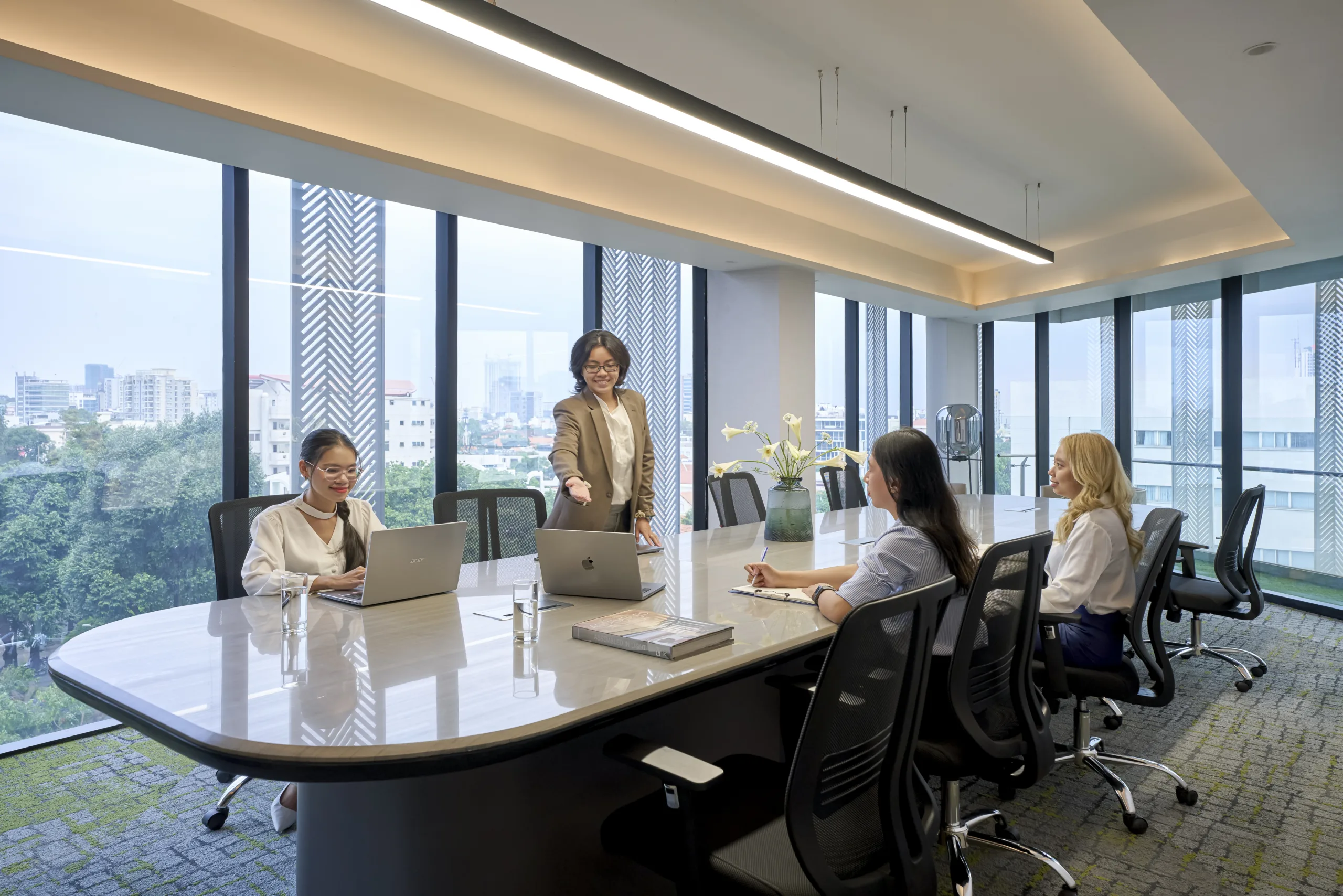
Conclusion: Don’t Let Your Office Be the Barrier
As we navigate 2026, the barrier to growth for many Vietnamese companies will not be a lack of capital or market demand. It will be the inability to attract the right people.
Do not let old walls, bad lighting, and a lack of service stand between you and the top 1% of talent.
By changing your mindset and viewing the workspace as a strategic “asset” rather than a “cost,” you directly address the core challenges of talent recruitment. You create a space that fosters pride, belonging, and growth. You reduce the friction that leads to burnout. And ultimately, you build a company that is sustainable, profitable, and vibrant.
The math is simple: A better office leads to better retention, a lower turnover rate, and a significantly reduced hiring cost.
Ready to Recruit Talents and Develop Your Team for 2026?
- Book a Tour → Experience how Dreamplex helps enterprises reduce cost per employee while enhancing daily performance.
- Join Our Leadership Roundtable → “AI Teams, Human Workplaces: The New Balancing Act.” Learn how Vietnam’s top leaders are designing offices that scale with technology — and still put people first
Contact Dreamplex for a free consultation and explore special offers this month:
- Hotline: +84 706 023 545
- Email: sales@dreamplex.co
Dreamplex – Creating workspace that grows with your business
Private when you need focus. Open when you need energy. Human, always.
We create “A Better Day at Work” that perfectly meets the needs of fast-growing companies that understand that their young employees expect more from their workplace.
Well-designed private, branded offices, 5-star hospitality-level care, and a savvy c help those companies attract, engage, and retain Millennial and GenZ talent in Vietnam.
Dreamplex has 5 locations in Ho Chi Minh City, 1 in Hanoi, and looks to expand further in 2026 to create a better workplace for even more people-centric companies and their employees. Companies like Tiki, AIA, Sky Mavis, Samsung, and more trusted Dreamplex to offer the best office for their teams.
WE CREATE A BETTER DAY AT WORK.

