

The Complete Guide to Opening an Office in Vietnam for International Companies (2026)
US companies registered $629 million in new Vietnam investment capital in the first nine months of 2025 — a 3.5× increase year-over-year, and the highest figure recorded since 2018. Boeing opened a permanent Hanoi office. NVIDIA signed an AI R&D centre. Apple’s supply chain now exceeds $16 billion. If your company is evaluating Vietnam as a next market, you are not early. But the decisions you make in the first six months — entity structure, city, workspace — have lasting consequences. This guide covers what actually matters when opening an office in Vietnam.

Why Vietnam, and Why Now
Vietnam has moved from a supply-chain story to a full-economy expansion destination. The US–Vietnam Comprehensive Strategic Partnership signed in September 2023 — Hanoi’s highest diplomatic tier — unlocked a wave of corporate commitments across technology, financial services, energy, and manufacturing. In 2025 alone, over 60 US companies participated in the largest-ever American business mission to Vietnam, and total FDI disbursements hit a record $27.62 billion across 4,054 new foreign projects.
The fundamentals driving this are structural, not cyclical. A young, educated workforce of 100 million. A manufacturing cost base significantly below China. A government actively courting foreign investment with fast-track licensing, tax incentives, and infrastructure investment. And a growing domestic consumer class that makes Vietnam an increasingly attractive end market, not just a production base.
For companies in technology, consulting, financial services, professional services, or any sector with regional Asia-Pacific ambitions, the question is no longer whether Vietnam belongs in the strategy — it is how to enter without wasting the first year on avoidable mistakes.
Step 1: Choose Your Legal Entity Structure
Opening an office in Vietnam starts with choosing the right entity type. The choice affects how quickly you can operate, what activities you can legally conduct, and how much capital commitment you need upfront.
Representative Office (Văn phòng đại diện) is the fastest and lowest-cost entry point. It can be established in 7–10 working days, requires no minimum capital, and is appropriate for market research, relationship building, and liaison activities. The critical limitation: a representative office cannot sign commercial contracts, generate revenue, or conduct direct business transactions. It is a presence, not an operating entity.
Branch Office (Chi nhánh) allows limited commercial activities but is subject to stricter licensing requirements than a subsidiary. Approval timelines run 30–45 days. Most international companies bypass the branch structure in favour of a wholly foreign-owned subsidiary.
Wholly Foreign-Owned LLC (Công ty TNHH một thành viên) is the standard choice for companies that intend to operate, sign contracts, hire staff, and generate revenue in Vietnam. It requires a minimum charter capital (which varies by industry — typically USD 10,000–50,000 for service companies, higher for regulated sectors), takes 30–60 days to establish, and gives full operational control. For most international service companies, this is the right structure from day one.
Joint Venture with a local Vietnamese partner is required in certain restricted sectors (media, logistics, some financial services) and can be beneficial when local relationships and distribution channels matter more than operational autonomy.
The choice of entity determines your registered address requirements, which in turn determines what kind of office space you need when opening an office in Vietnam. A representative office and an LLC both require a valid, verifiable registered address in Vietnam — which is where workspace decisions become legal decisions, not just operational ones.
Step 2: Choose Your City
Vietnam’s two major commercial cities serve different business purposes. The choice is consequential and not easily reversed once teams are built and leases signed.
Ho Chi Minh City is the economic engine — the country’s financial, commercial, and tech hub. Over 70% of FDI projects are concentrated here or in surrounding provinces. AmCham Vietnam’s HCMC chapter has 550+ corporate members. The startup ecosystem, international banking infrastructure, and professional talent pool are deeper here than anywhere else in the country. Most companies entering Vietnam for commercial, technology, or financial services reasons should start in HCMC.
Hanoi is the political and diplomatic capital. If your company’s Vietnam operations require regular engagement with central government ministries, state-owned enterprises, or international institutions, Hanoi proximity matters. Boeing’s permanent Vietnam office is in Hanoi for this reason. The professional talent pool is smaller and the city moves at a different pace — but for companies where government relations are core to the business, Hanoi is the right primary base.
Some companies establish in both cities simultaneously. A more common pattern is HCMC first, Hanoi six to eighteen months later once the initial operations are stable.
Step 3: Understand the Office Space Decision
This is where most international companies lose time. The legal entity process and the workspace process are typically handled by different advisors — lawyers handle incorporation, while office brokers or operators handle space — and they often do not communicate clearly with each other.
The practical reality: your legal entity needs a registered address from day one, even before you have staff on the ground. Your workspace arrangement needs to be in place before your business registration can be filed. And whatever address you register will be the address used for all government correspondence, tax filings, and official communications — getting it wrong creates administrative problems that take months to unwind.
For most international companies entering Vietnam for the first time, a serviced office in Vietnam is the lowest-risk, fastest-path option.
The reasons are practical:
First, a serviced office provides an immediately usable registered address for business registration without requiring a traditional lease agreement with a landlord, fit-out costs, or a 2–3 month setup period. You can have a legal, operational address in HCMC or Hanoi within days.
Second, the all-inclusive model means your operating costs are predictable from month one. No separate bills for electricity, internet, facilities management, or reception — one invoice covers everything. For finance teams reporting to US or international headquarters, a single monthly line item is dramatically easier to manage than the variable cost structure of a traditional office lease.
Third, serviced offices offer genuine flexibility as the team grows. Starting with two people and scaling to twenty over eighteen months is standard for international market entries — and a quality serviced office accommodates that without lease renegotiations or construction disruption.
What to Look for in a Serviced Office in Vietnam
Not all serviced office providers are equivalent. For international companies opening an office in Vietnam, several factors separate a workspace that works from one that creates ongoing friction:
The registered address must be legally usable for business registration and tax filing. This is not guaranteed — not every coworking provider’s address is accepted by Vietnam’s business registration system. Confirm explicitly that the address is already used by registered entities and has a valid landlord consent letter on file.
The contract should be with the workspace operator directly, not with the building owner. This protects you from landlord disputes affecting your occupancy and simplifies the legal relationship significantly.
English-speaking member experience support is non-negotiable for the early months. When your newly hired local HR manager is asking questions about mail handling, visitor access, or IT setup, they should not be navigating those conversations in a language barrier.
Meeting rooms and day offices should be accessible on demand. Your regional director from Singapore or your VP from San Francisco will visit. Having a proper client-facing meeting space at your address — not just a hot desk in a shared room — matters for the impression you make.
Location relative to where your clients, partners, and government contacts operate. In HCMC, District 1 is the commercial centre. District 2 (Thảo Điền) serves companies whose teams live in the international residential corridor. In Hanoi, Đống Đa and Ba Đình are close to government ministries and the established professional services cluster.
Dreamplex: Built for International Teams Entering Vietnam
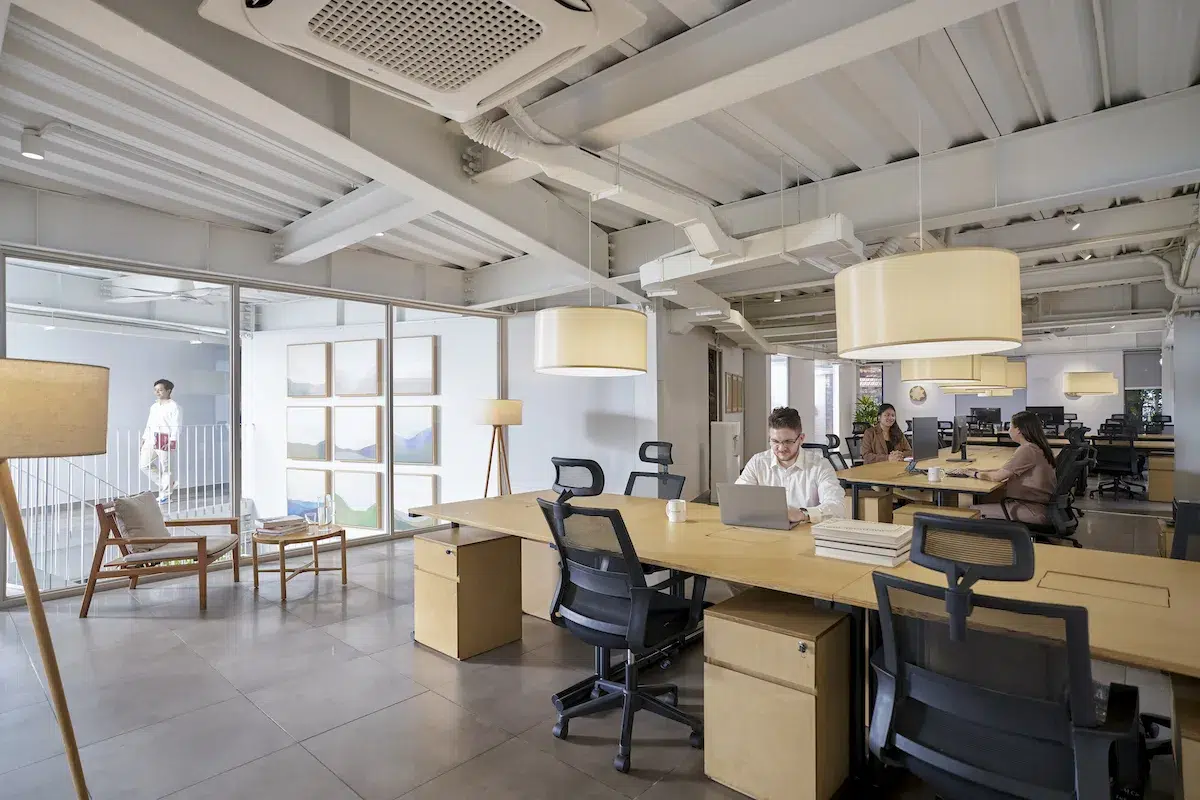
Dreamplex operates five locations across Ho Chi Minh City and one in Hanoi, specifically serving companies that want to move fast without compromising on quality. Members include Mainstream Renewable Power, which used Dreamplex as its Vietnam base during market entry, and Faraday Technology, which chose Dreamplex specifically for setting up a new HCMC subsidiary.
All Dreamplex locations offer legally valid registered addresses for business registration and tax filing, contracts signed directly with Dreamplex (no landlord intermediary), English-speaking Member Experience teams, and fully equipped private offices from small teams to enterprise headquarters. The service standard is modelled on five-star hospitality — operational details are handled before they become problems.
For international companies moving quickly — which most international market entries require — the ability to have a registered address, a functioning workspace, and a professional reception presence within days rather than months is a structural advantage that is difficult to quantify but consistently cited by members as the decision that saved the first quarter.
Next steps:
- Explore Dreamplex locations in Ho Chi Minh City
- Explore Dreamplex Thái Hà in Hanoi
- Compare serviced office options at Dreamplex
Ready to Expand Your Business to Vietnam in 2026?
- Book a Tour → Experience how Dreamplex helps enterprises reduce cost per employee while enhancing daily performance.
- Join Our Leadership Roundtable → “AI Teams, Human Workplaces: The New Balancing Act.” Learn how Vietnam’s top leaders are designing offices that scale with technology — and still put people first
Contact Dreamplex for a free consultation and explore special offers this month:
- Hotline: +84 706 023 545
- Email: sales@dreamplex.co
Dreamplex – Creating workspace that grows with your business
Private when you need focus. Open when you need energy. Human, always.
We create “A Better Day at Work” that perfectly meets the needs of fast-growing companies that understand that their young employees expect more from their workplace.
Well-designed private, branded offices, 5-star hospitality-level care, and a savvy c help those companies attract, engage, and retain Millennial and GenZ talent in Vietnam.
Dreamplex has 5 locations in Ho Chi Minh City, 1 in Hanoi, and looks to expand further in 2026 to create a better workplace for even more people-centric companies and their employees. Companies like Tiki, AIA, Sky Mavis, Samsung, and more trusted Dreamplex to offer the best office for their teams.
WE CREATE A BETTER DAY AT WORK.

