


The 2026 Growth Paradox: Why Smart Capital is Ditching the Lease for the Service
Executive Summary: The Shift to “Usership”
The commercial real estate playbook has been rewritten. As we enter 2026, the data from Vietnam’s tech and professional services sectors reveals a startling divergence. On one side, companies trapped in pre-2024 lease structures are bleeding capital into depreciating assets and unused square footage. On the other, agile market leaders are leveraging flexible term / short term workspace models to deploy capital with surgical precision.
This article provides a deep-dive analysis into office space rental for startup in Vietnam and the financial mechanics of this shift. We explore why the “prestige” of a self-managed headquarters is being replaced by the strategic advantage of office space rental for startup agility and how decentralized locations are becoming the new frontier for talent retention.
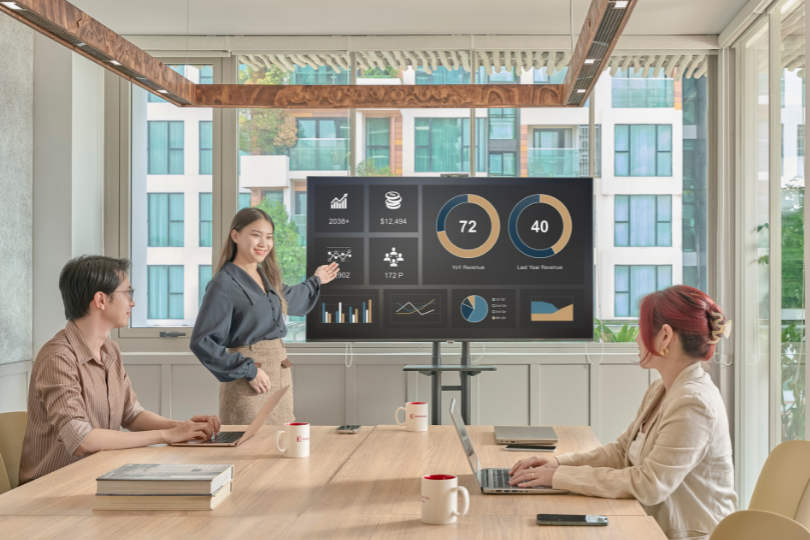
The New Economic Reality of 2026
The investment landscape in Vietnam has matured significantly over the last twelve months. Following a stabilizing 2025, where startup funding saw a notable 28% rebound and total raised capital hit $184 million by year-end, the expectation for 2026 is aggressive, calculated growth. Investors are no longer just funding “ideas”; they are funding execution.
However, this capital comes with tighter strings. The “growth at all costs” mantra of the early 2020s has been replaced by a demand for “efficient growth.” For a Series A or Series B founder, or a Country Manager establishing a Vietnam HQ, every dollar spent on non-revenue-generating activities is now scrutinized.
This brings us to the central conflict of modern business infrastructure: the real estate lag.
Business cycles in the tech and innovation sectors operate in six-month sprints. You raise funds, you hire aggressively, you pivot product strategy, and you scale marketing — all within two quarters. Yet, the traditional real estate market still operates on three-to-five-year cycles. This misalignment creates a dangerous friction point. A lease signed today based on a headcount of 30 employees becomes a stranglehold six months later when you need space for 80, or conversely, a financial anchor if a market shift forces you to consolidate.
In 2026, the “tenant’s market” in Ho Chi Minh City — characterized by high supply in Grade A buildings and vacancy rates hovering around 20% — offers a tempting illusion of cheap traditional rents. But seasoned leaders know that the base rent is only the tip of the iceberg. The real killer of growth is Capital Expenditure (CAPEX).
The CAPEX Sinkhole: The Hidden Cost of “Ownership”
When a company signs a traditional lease, they are not just renting space; they are effectively entering the construction and facilities management business. The financial modeling of a traditional office build-out reveals a sobering reality that often catches Finance Directors off guard.
The Math of Inefficiency
To make a raw “shell and core” space functional for a 50-person team, the upfront investment is staggering. In 2026, a high-quality fit-out in District 1 or 3 costs between $100,000 and $300,000. This figure includes:
- Construction & M&E: Walls, flooring, HVAC adjustments, and lighting.
- Furniture: Ergonomic chairs and desks (roughly $50,000–$150,000 for quality setups).
- IT Infrastructure: Server rooms, cabling, enterprise-grade security, and conferencing hardware ($30,000–$100,000).
This $100,000 to $300,000 check must be written before a single employee sends an email. In accounting terms, this capital sits on the balance sheet as a depreciating asset. It generates zero revenue. It attracts zero customers. It improves zero product features.
For a startup with $3 million in funding, spending $150,000 on furniture and walls is equivalent to burning 5% of your runway on day one. That same capital could have funded three senior engineers for a year, a market expansion campaign into Hanoi, or a critical product pivot. The opportunity cost of CAPEX is not just the money spent; it is the growth opportunity forfeited.
The Trap of Depreciation
Furthermore, accounting standards often require depreciating these assets over 5 to 7 years. But does a modern tech company keep the same office layout for 7 years? Rarely. Companies outgrow spaces, change workflows, or get acquired long before the furniture creates a return on investment. The result is “sunk cost fallacy” in physical form — companies staying in inadequate spaces because they haven’t “amortized the renovation” yet.
The Solution: From Fixed CAPEX to Variable OPEX
The antidote to the CAPEX sinkhole is the shift to flexible term / short term workspace models, often referred to in 2026 as “Coworking 2.0” or “Space-as-a-Service.”
This model is not about renting a desk; it is about outsourcing the entire real estate function. By moving into a fully serviced environment like Dreamplex, companies convert a massive, lumpy fixed cost (CAPEX) into a smooth, predictable operating expense (OPEX).
Why CFOs Prefer OPEX in 2026
- Preservation of cash flow: By eliminating the upfront build-out cost, companies keep hundreds of thousands of dollars in the bank. This liquidity is crucial for weathering market volatility or seizing sudden opportunities.
- Balance sheet health: Without heavy fixed assets dragging down return on asset (ROA) ratios, the company looks leaner and more efficient to investors.
- Perfect alignment with revenue: In a flexible model, you pay for the space you use now. If you land a new client and need to hire 10 people, you add a suite next month. If a project ends, you downsize. Your real estate costs scale linearly with your business revenue, rather than remaining a static burden.
Is flexible workspace cheaper than traditional leasing? While the monthly rent per square meter may appear higher in a serviced office, the Total Cost of Occupancy is often 20-40% lower. This is because flexible rates include utilities, cleaning, reception staff, security, IT maintenance, and coffee — costs that are piled on top of base rent in traditional leases. When you factor in the zero upfront CAPEX, the financial advantage becomes undeniable.

Case Study: The Agility Advantage in Action
Consider the trajectory of a hypothetical Fintech startup, “FinScale,” operating in Ho Chi Minh City in early 2025.
Scenario A (Traditional lease): FinScale signs a 3-year lease for 300sqm in District 1. They spend $120,000 on a beautiful fit-out. Six months later, they close a Series B round and need to double their team. They are physically stuck. They have to lease a second, separate office down the street (splitting their culture) or pay a massive penalty to break the lease and walk away from their $120,000 renovation.
Scenario B (Dreamplex model): FinScale takes a private 30-person enterprise suite at Dreamplex. No upfront CAPEX. When the Series B hits, they simply inform the Community Manager. Within two weeks, they expand into the adjacent suite, taking over a dedicated floor. They execute this expansion with zero construction noise, zero downtime, and zero wasted capital.
In 2026, Scenario B is the only responsible choice for a high-growth company.
The Hospitality-Led Difference: Why “Office Space Rental for Startup” Means More Than Desks
When searching for office space rental for startup growth, leaders often confuse “coworking” with “noisy open floor plans.” This is a legacy perception. The modern “Coworking 2.0” model, pioneered by Dreamplex, is rooted in Hospitality, not just facility management.
The difference lies in the “Who,” not the “What.” In a traditional lease, your interaction with the building management is transactional: you pay rent, they fix the elevator. In a hospitality-led model, the workspace provider acts as an extension of your HR and Operations team.
The “Care” Factor
At Dreamplex, Member Experience teams are trained in 5-star hospitality standards. They don’t just check badges; they curate the environment. From handling guest reception with white-glove professionalism to organizing knowledge-sharing workshops with industry experts, the workspace becomes a tool for employee engagement.
For a fast-scaling startup, this is invaluable. It frees up the “Head of Operations” or HR Director from the drudgery of managing cleaners, fixing internet outages, and restocking the pantry. Instead of managing a facility, they can focus on managing culture and performance. The operational burden is lifted, allowing the leadership team to focus entirely on their core mission.
Common Questions when choosing a suitable real estate model
Q: What is the difference between CAPEX and OPEX in office leasing?
A: CAPEX (Capital Expenditure) refers to large upfront investments in fixed assets like renovations, furniture, and IT infrastructure, typical of traditional leases. OPEX (Operating Expenditure) refers to recurring day-to-day costs. Flexible workspaces like Dreamplex shift real estate costs from CAPEX to OPEX, freeing up cash flow and offering greater financial agility.
Q: How does the “Hub-and-Spoke” office model work in Vietnam?
A: The Hub-and-Spoke model involves a central headquarters (Hub) in the CBD for client meetings and brand prestige, supported by smaller satellite offices (Spokes) in decentralized residential areas like District 2 or District 7. This reduces commute times for employees and optimizes rental costs.
Q: Is flexible office space suitable for teams larger than 50 people?
A: Yes. Modern flexible workspace providers like Dreamplex offer “enterprise solutions” — dedicated private floors or custom-branded suites designed for teams of 50 to 500+. These spaces offer the privacy and branding of a traditional office with the flexibility and service of a coworking model.

Conclusion: The Strategic Pivot
The decision on how to house your company is no longer a real estate decision; it is a capital allocation decision. In an era where technology moves instantly and market opportunities arise overnight, anchoring your business to a slow-moving, capital-intensive asset like a traditional lease is a strategic error.
The winners of the 2026 Vietnamese market will be the companies that remain fluid. They will own their intellectual property, their brand, and their customer relationships—but they will rent their infrastructure. They will scale without friction, access decentralized locations to retain top talent, and keep their war chest full of cash, not office furniture.
It is time to stop building offices and start building the future.
Ready to Scale Your Business for 2026?
- Book a Tour → Experience how Dreamplex helps enterprises reduce cost per employee while enhancing daily performance.
- Join Our Leadership Roundtable → “AI Teams, Human Workplaces: The New Balancing Act.” Learn how Vietnam’s top leaders are designing offices that scale with technology — and still put people first
Contact Dreamplex for a free consultation and explore special offers this month:
- Hotline: +84 706 023 545
- Email: sales@dreamplex.co
Dreamplex – Creating workspace that grows with your business
Private when you need focus. Open when you need energy. Human, always.
We create “A Better Day at Work” that perfectly meets the needs of fast-growing companies that understand that their young employees expect more from their workplace.
Well-designed private, branded offices, 5-star hospitality-level care, and a savvy c help those companies attract, engage, and retain Millennial and GenZ talent in Vietnam.
Dreamplex has 5 locations in Ho Chi Minh City, 1 in Hanoi, and looks to expand further in 2026 to create a better workplace for even more people-centric companies and their employees. Companies like Tiki, AIA, Sky Mavis, Samsung, and more trusted Dreamplex to offer the best office for their teams.
WE CREATE A BETTER DAY AT WORK.

