


The Hospitality Pivot: Why Flexible Workspace Is the Right Choice for Modern CEOs
The era of the “office manager” is ending. In the boardrooms of Ho Chi Minh City and Hanoi, a new priority is taking precedence: the curation of experience – now usually found in flexible workspace models. For decades, the definition of a headquarters remained static. It was a physical address, a lease contract, and a monthly utility bill. Today, that model is failing. It fails the CEO who needs to pivot strategy overnight. It fails the HR Director fighting to retain Gen Z talent. Most importantly, it fails the CFO who sees capital locked in drywall and furniture as a missed opportunity.
Business leaders in Vietnam face a distinct choice. They endure the friction of traditional real estate management or they embrace a new standard – the hospitality-led workspace. This is not about renting a desk. It is about subscribing to a service that removes every obstacle between a team and their best work.
The Service Standard: Beyond Four Walls
The primary driver for this shift is the demand for “Care”.
In a traditional setup, if the internet fails or the air conditioning breaks, productivity halts until a technician arrives. The burden of resolution falls on the tenant. The Country Manager or the Operations Lead becomes a part-time facility manager. This distraction dilutes focus.
In a serviced environment, these issues are invisible. They are resolved before the tenant notices. This is the difference between renting space and partnering with a provider. The philosophy is simple. A flexible workspace should function with the intuitive service of a five-star hotel.
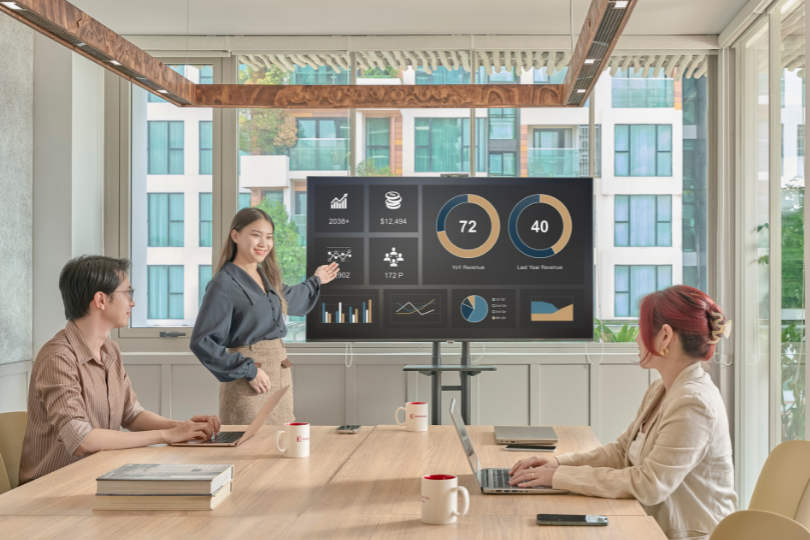
When a client arrives for a meeting, the reception team knows their name. The coffee is ready. The audio-visual equipment in the boardroom works immediately. This level of care changes the psychology of the employee. They no longer commute to a facility. They arrive at a destination where they feel valued.
For the Operations Director, the relief is tangible. The headache of vendor management vanishes. A single point of contact handles everything from IT security to pantry stocking. This allows the internal team to focus on culture and performance rather than logistics.
The Agility Mandate
Stability used to mean a five-year lease. In 2026, stability means the ability to change.
Market conditions in Southeast Asia move faster than construction permits. A tech firm might need twenty desks in January and fifty in June. Under a traditional lease, this growth creates a crisis. The company must find a new building, negotiate a break clause, and manage a complicated relocation.
The flexible model eliminates this risk. It converts real estate from a fixed constraint into a fluid resource. Companies expand or contract their footprint based on immediate needs.
This agility extends to the contract itself. The “right choice” for a modern enterprise is a term that aligns with business cycles, not landlord preferences. It allows a startup to conserve cash flow and a multinational to test a new market without a heavy anchor.
Financial Logic: The End of CAPEX
The financial argument for the hospitality-led model is irrefutable. It centers on the transition from Capital Expenditure (CAPEX) to Operational Expenditure (OPEX).
Fitting out a Grade A office requires significant upfront capital. Design fees, construction, furniture, and IT infrastructure often amount to hundreds of thousands of dollars. This is money that does not generate revenue. It sits in the walls and the floorboards.
Smart capital prioritizes efficiency. By choosing a serviced office, businesses reduce their initial outlay to zero. They pay a single, all-inclusive monthly fee. There are no surprise costs for elevator maintenance, printer toner, or reception staffing.
Consider the hidden payroll burden of a traditional office. A receptionist requires a salary, benefits, and coverage when sick. A cleaner requires supplies and oversight. Security requires a separate contract. In a hospitality-led model, these lines vanish from the P&L. They merge into a single, predictable invoice.
The savings over a standard term are substantial.
Metrics | Traditional Lease (The "Anchor") | Serviced Office (The "Accelerator") |
Setup Speed | 4-6 months. Search, negotiate, fit-out. Signing now means a Q2 2026 start, missing the Q1 sprint. | 2-4 weeks. Sign today, move in next week. Fully operational before Tet 2026 to capture early-year momentum. |
Financial Risk | Massive CAPEX. 3-6 month deposit + construction + IT infrastructure + furniture. A cash-flow nightmare. | Zero CAPEX. A small, refundable deposit. Capital is preserved for core business growth and talent acquisition. |
Operational Load | High stress. You manage cleaners, internet, utilities, and maintenance. Your Office Manager becomes a facility technician. | Zero stress. Hospitality-level care teams handle everything. One bill, all services. Your Ops team focuses on people, not plumbing. |
Flexibility | Rigid. Locked in for 3-5 years regardless of headcount changes. Downsizing creates legal penalties. | Agile. Scale up or down as needed. Ideal for unpredictable growth cycles and project-based expansions. |
Design Psychology and Productivity
The physical environment dictates cognitive performance. A poorly lit room with bad acoustics drains energy. A thoughtfully designed space recharges it.
Providers like Dreamplex approach design not as decoration but as a tool for efficiency. The layout considers the different modes of work. There are soundproof booths for deep focus. There are lounges for casual collaboration. There are boardrooms for formal decision-making.
This variety is critical. The human brain fatigues when forced to work in the same posture and setting for eight hours. Movement stimulates creativity. Having the option to take a call in a phone booth and then brainstorm on a sofa keeps the mind engaged.
Traditional offices often suffer from a lack of intentionality. They are rows of desks under fluorescent lights. This industrial approach ignores the nuance of modern knowledge work. The premium flexible workspace corrects this. It borrows cues from hospitality and residential design to create an atmosphere of comfort.
Community as a Retention Tool
Isolation is the silent killer of productivity. While remote work offers freedom, it lacks the spark of collision that drives innovation.
The “Right Choice” is a space that engineers these collisions. It fosters a sense of belonging that a home office cannot replicate. This is not about forced networking. It is about the natural energy of working alongside other ambitious professionals.
A marketing agency might share a lounge with a fintech unicorn. A freelancer might find their next client at the coffee bar. These interactions create a micro-economy within the building.
For HR leaders, this community is a retention asset. Employees want to work in a place that feels alive. They want access to events, workshops, and social hours without having to organize them personally. The workspace partner acts as the culture lead, curating a calendar of activities that bring people together.
This bridges the gap between the stiffness of a corporate tower and the chaos of a coffee shop. It provides the professional infrastructure of the former with the vibrancy of the latter.
The Landlord’s Perspective: A Shift in Value
The shift to flexible workspaces is not only a tenant trend. It is a necessary evolution for asset owners.
Landlords face a market with high vacancy rates in older buildings. The traditional tenant is shrinking their footprint. They are adopting hybrid models and require less square footage.
Forward-thinking owners realize that providing four walls is no longer enough. They must provide a platform for growth. Partnering with a premium operator allows them to modernize their asset without managing the daily operations.
This creates a prestige factor. A building filled with dynamic, high-growth companies has a different energy than one filled with silent, locked doors. It attracts better retail tenants on the ground floor. It raises the profile of the entire property.
For the landlord, the serviced office model offers a solution to the “spec suite” dilemma. Instead of guessing what a tenant wants and building it out, they bring in an operator who understands the exact needs of the modern workforce.
Defining the “Right Choice”
With dozens of options in the market, how does a leader distinguish the commodity from the premium partner?
The distinction lies in the intention. Commodity providers sell square meters. Premium partners sell success. The “right choice” prioritizes three pillars:
- Care: the staff acts as an extension of your team. They are not merely building security or gatekeepers. They are problem solvers. They anticipate needs. If a catering order arrives late, they handle it. If a guest needs a taxi, they arrange it. This level of service liberates the tenant to focus on their core business.
- Flexibility: the terms serve your growth, not the landlord’s yield. A true partner understands that business is unpredictable. They offer solutions that allow you to scale up during a busy season and scale down if the market contracts. They do not penalize you for success or struggle. They accommodate it.
- Connection: the environment fights burnout. It connects your team to a wider network of professionals. It provides spaces for rest and spaces for intense focus. It acknowledges that work is a human activity, not a mechanical one.
When these elements align, the office ceases to be a cost center. It becomes a strategic asset. It attracts better talent. It impresses clients. It allows the leadership team to focus entirely on their mission, confident that the environment is handled by experts.

Common Questions people also ask about this shift
Office cost optimization: How does a flexible workspace save money?
A flexible workspace reduces costs by eliminating the heavy upfront investment of construction and furnishing. It converts fixed capital costs into variable operational costs. Companies also save on hidden expenses like reception staff salaries, cleaning services, and security, which are all included in the single monthly fee. This consolidation of vendors into one invoice reduces administrative overhead significantly.
Office design for employee retention: Why is it critical?
Employees in 2026 expect their workplace to rival the comfort of their homes. High-quality office design that includes lounge areas, phone booths, and ergonomic furniture signals that the company values its staff. This focus on the “Employee Experience” significantly lowers turnover rates and boosts daily morale. A well-designed flexible workspace removes the friction of daily work, allowing talent to focus on achievement rather than discomfort.
Flexible office solutions: What options suit a growing team?
Growing teams typically choose between private serviced offices and enterprise suites. A serviced office provides a private, lockable room within a shared floor. An enterprise suite offers a fully branded, private floor with its own meeting rooms and access control, providing corporate identity while maintaining the benefits of a managed building. Both options allow for rapid scaling without the legal complexities of traditional commercial leases.
How do I choose an office for rent in Vietnam?
Select a workspace partner that aligns with your company culture. Look beyond the price per square meter and evaluate the service level. Visit locations like Dreamplex to test the atmosphere. Ensure the provider offers the ability to scale up or down without heavy penalties, which is the hallmark of a true coworking space or serviced office. Ask specific questions about their community events and tenant mix to ensure it matches your business values.
The Future of the Headquarters
The concept of the headquarters is shrinking in size but growing in importance.
Companies will likely have smaller core footprints. They will rely on a network of flexible spaces to support remote teams and satellite offices. The central hub, however, must be exceptional.
It must be a place worth the commute. It must offer something that the home office cannot. That something is connection. It is the high-speed internet, the ergonomic chair, the premium coffee, and the face-to-face interaction.
The serviced office provider acts as the custodian of this standard. They ensure that every day the office opens, it is ready to perform. They take on the burden of maintenance, upgrades, and hospitality.
For the CEO, this is a liberation. It allows them to trade keys for concierges. It allows them to stop managing a building and start managing a business.
Ready to Scale Your Business for 2026?
- Book a Tour → Experience how Dreamplex helps enterprises reduce cost per employee while enhancing daily performance.
- Join Our Leadership Roundtable → “AI Teams, Human Workplaces: The New Balancing Act.” Learn how Vietnam’s top leaders are designing offices that scale with technology — and still put people first
Contact Dreamplex for a free consultation and explore special offers this month:
- Hotline: +84 706 023 545
- Email: sales@dreamplex.co
Dreamplex – Creating workspace that grows with your business
Private when you need focus. Open when you need energy. Human, always.
We create “A Better Day at Work” that perfectly meets the needs of fast-growing companies that understand that their young employees expect more from their workplace.
Well-designed private, branded offices, 5-star hospitality-level care, and a savvy c help those companies attract, engage, and retain Millennial and GenZ talent in Vietnam.
Dreamplex has 5 locations in Ho Chi Minh City, 1 in Hanoi, and looks to expand further in 2026 to create a better workplace for even more people-centric companies and their employees. Companies like Tiki, AIA, Sky Mavis, Samsung, and more trusted Dreamplex to offer the best office for their teams.
WE CREATE A BETTER DAY AT WORK.

