


Virtual Office in Vietnam: What Actually Makes an Address Legal, and How to Choose One
A virtual office in Vietnam is legal under Enterprise Law 2020, Article 42, which defines a registered head office as a contact address, not a workspace requirement. Dreamplex prices its virtual office packages from 30,000 VND a day across six locations, including two virtual office district 1 addresses. The real risk for founders and country managers sits with providers that cannot back the address with signage, mail handling, and a signed service agreement.

A virtual office in Vietnam does not need a desk. It needs a real, contactable address. That address has to receive official mail, display company signage, and hold up if a tax inspector shows up unannounced. That is the entire legal test, and it is simpler than some providers make it sound.
This guide covers four things: whether a virtual office holds up legally, what a legitimate package includes, how much it costs in District 1 and beyond, and who actually needs one.
Is a virtual office legal in Vietnam?
Yes, a virtual office is legal in Vietnam. The law is specific about why. Under Vietnam’s Enterprise Law 2020, Article 42, a company’s registered head office is defined as a contact address, not a workspace.
There is no minimum floor area requirement, and multiple businesses can register at the same building. That distinction is what makes the virtual office model possible. It separates the legal address from the physical desk a company may not need yet.
Three conditions keep a virtual office compliant after setup. The address needs company signage, so an inspector or a courier can confirm the business exists there. Official mail must be received and forwarded promptly. That includes tax notices and legal documents, not just parcels.
A signed service agreement also has to be on file. It proves the company has a genuine right to use the address, ready to show the tax authority on request. One exception applies: household businesses, or hộ kinh doanh, cannot use a virtual office. They must register a verified physical address instead, a distinction covered in Dreamplex’s guide to business registration requirements.
This scrutiny has sharpened in 2026. Vietnam’s shift to Level 5 public services links business registration directly to the National Population Database. Tax authorities, banks, and the Department of Planning and Investment can now cross-check a company’s registered address against its actual activity in real time. A virtual office that meets the three conditions above holds up fine under that system.
This is not abstract for a founder or a country manager choosing where to register. A flagged address can freeze a bank transfer or delay an investor’s first wire, at exactly the wrong moment.
What’s included in a virtual office membership
A working virtual office covers more than the address itself. At minimum, expect a registered office address you can legally put on a business license, invoices, and letterhead. Beyond that baseline, package quality varies more than most buyers expect.
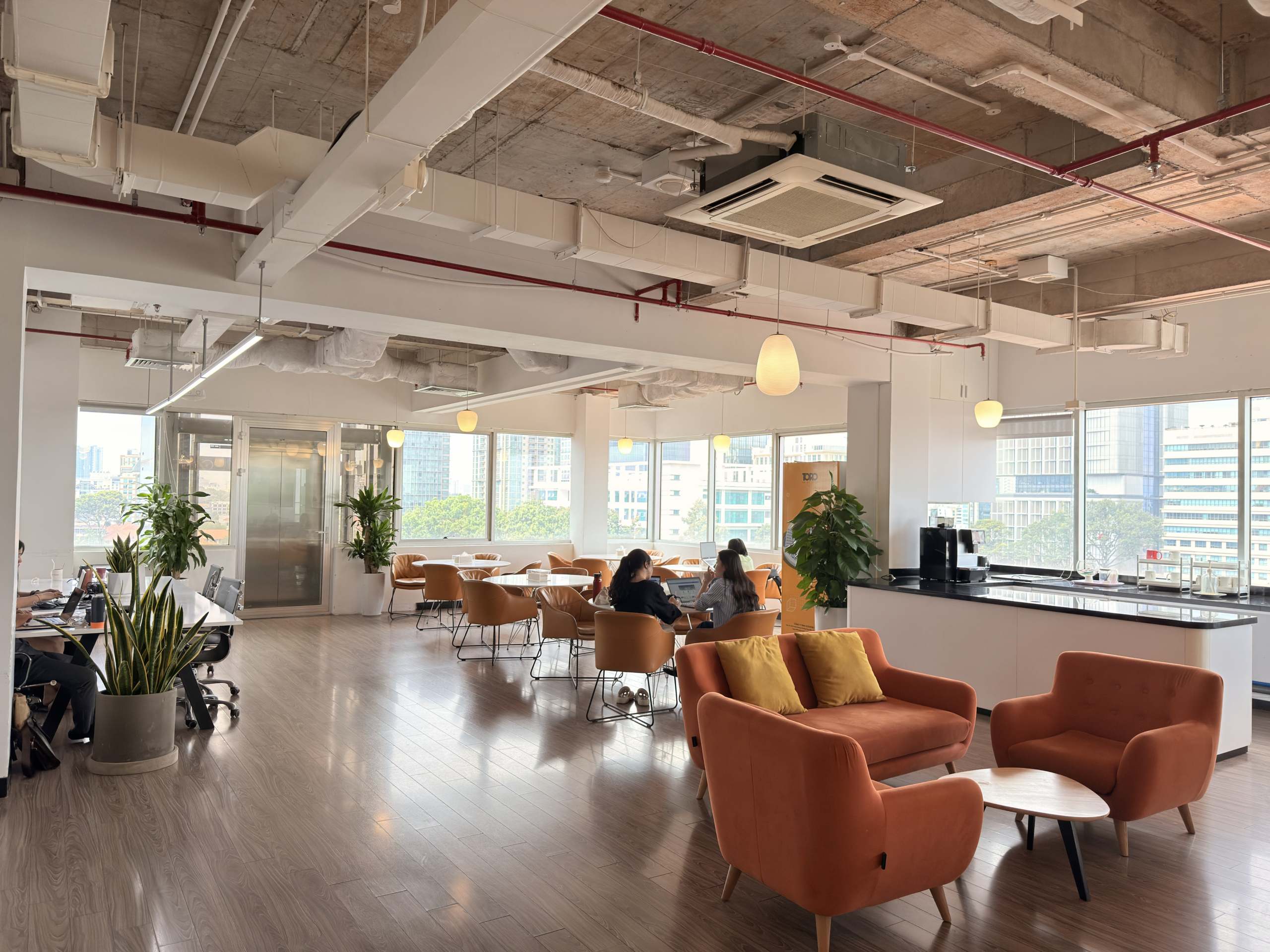
A Dreamplex virtual office includes company signage at the building, mail and parcel handling from an on-site team, and one free coworking day a month. It also includes access to bookable meeting rooms at member rates.
None of that is decorative. The coworking day and meeting room access exist because a virtual office address occasionally needs a room behind it: a client call, a document signing, an unannounced visit from the tax office. An address-only service that simply hangs a sign cannot offer any of that.
Package depth is where virtual office providers differ most. A basic tier might cover only the address and mail forwarding. A fuller membership, like Dreamplex’s, bundles the address with real workspace access, so the company has somewhere to work the day it actually needs to.
A virtual office membership also comes with the rest of Dreamplex’s community: monthly social events, workshops, wellbeing programs, and creative sessions open to every member, virtual or physical. For a solo founder working from home most days, that access is often the first professional network the business has.
How to choose a legitimate virtual office provider
Choosing a legitimate virtual office provider matters more in 2026 than it used to. Tax authorities now cross-check registered addresses against national business data. A building registering hundreds of companies with no visible operation gets flagged as a risk.
Once an address is flagged, every business tied to it can have its tax code locked. That freezes invoicing and bank transactions until the issue clears. For a growing company, a locked tax code is not a technicality; it is a stopped business.
A legitimate virtual office provider clears four checks before a contract gets signed:
- 1. The building is a genuine commercial address, not a residential unit or an unmarked alley entrance.
- 2. The provider puts its right to lease the address in writing, in a signed service agreement you can review before committing.
- 3. Someone is physically present during business hours to receive mail and greet an inspector.
- 4. The provider can name other real, operating businesses at the same address, rather than stacking registrations to sell more contracts.
If a provider hesitates on any of these four points, that hesitation is the answer worth listening to. A price far below the district average is often the clearest signal. A virtual office that costs a fraction of comparable addresses nearby usually skips one of the four checks above, most often the physical presence requirement.
A second signal is silence. A provider that cannot say, on a call, which building an address sits in, or cannot name a contact who works there, is not running a real virtual office setup. Ask for the building name before asking for the price. Ask, too, whether the provider has handled a business registration at that address before. A provider with an established track record can usually produce examples on request.
Virtual office pricing in District 1 and beyond
Virtual office pricing in Vietnam tracks two things: how much address you are buying, and how much support comes attached to it. Dreamplex prices its virtual office packages from 30,000 VND a day. Two of its six locations are virtual office district 1 addresses, at Nguyễn Trung Ngạn and Trần Quang Khải.
Other locations sit in District 2 and in Hanoi’s Đống Đa district. The standard term across all of them is 12 months. That matches how long a registered address needs to stay stable for licensing and banking purposes.
A virtual office costs less than a coworking desk, which costs less than a private office. The table below lines up the three, side by side.
Feature | Virtual office | Coworking hot desk | Private office |
Registered business address | Yes | Yes | Yes |
Physical desk | No | Shared, flexible | Dedicated, branded |
Starting price at Dreamplex | From 30,000 VND per day | From around 2,500,000 VND per month | From around 4,000,000 VND per month |
Minimum term | 12 months | Monthly | Monthly and up |
For a founder budgeting a first year, this is usually where the math starts. A virtual office now, a coworking desk or private office once revenue and headcount justify the move. None of these figures include the state fees paid separately to register the company itself, which apply regardless of the workspace model chosen.
Price moves with three things: the district, how much meeting room time is included, and whether the provider bundles in workspace access at all. A bare address in a less central district costs the least. A virtual office with a prime District 1 signature and real workspace behind it costs more, but it also holds up better under an inspection.
In Hanoi, the same model applies at Dreamplex’s Thái Hà location in Đống Đa district, priced on the same structure as the Ho Chi Minh City addresses. A company opening in both cities can run one virtual office in each without renegotiating the model twice.
Who actually needs a virtual office: founders, country managers and growing teams
A virtual office fits three situations well, and a fourth one poorly.
Founders registering a first company get the clearest win. They get a professional business address for startup budgets, plus a real service agreement. They do not pay for a desk nobody sits at yet. The cash saved goes toward the product, not the rent.
Country managers opening a Vietnam office for a global employer use a virtual office the same way. It is a compliant, fast route to a registered entity and a live tax code. It works well before committing to a lease sized for a headcount that is not confirmed yet. It is also a workable first move for a US company, or any foreign employer testing the market before it leases a floor.
Growing teams already working from home or a cafe use a virtual office to formalize the business. It gives them a real address without forcing everyone onto a shared desk they do not need daily. A remote or hybrid team that gathers only for planning sessions fits the same pattern. The company keeps one real address and a room to meet in, while most of the week happens wherever people actually work.
Retail, manufacturing, and any business that needs a physical, inspectable operating floor is the fourth case. A virtual office will not cover a business line that legally requires verified premises. No provider should claim otherwise. None of these four groups needs to guess; the right starting point is usually obvious once the business line and the client-facing needs are clear.

From virtual office to a full office: the upgrade path
The best virtual office setups plan for the day a company outgrows them. At Dreamplex, a virtual office member can move to a hot desk, a fixed desk, or a private office at any of six locations. The registered address does not change, and neither does the tax code. Only the team size changes.
That continuity matters more than it sounds. Re-registering a business address partway through the year means new filings and new bank paperwork. It also opens a window where the tax code can flag as unstable. For a founder or a country manager without a confirmed headcount yet, that flexibility matters. It is the real value of getting the virtual office decision right from the start.
In practice, that move usually happens within the first year. A small team outgrows a virtual office once client meetings start needing a dedicated room more than once a month, or once a new hire needs somewhere to sit every day.
The 30,000 VND a day at Dreamplex is not really what is being bought. What is being bought is the option to grow without restarting the paperwork. Check the building, and read the service agreement. Confirm someone is actually there to receive an inspector before signing on for a year at any address.
Conclusion
In 2026, business registration is the starting block of a well-governed journey. Do not let elementary errors regarding address or legality slow down your progress in a rapidly changing market. Turn the business headquarters into a competitive advantage — a place where professionalism, flexibility, and legal compliance converge to create momentum for a breakthrough.
Ready to get your business settled and thriving?
- Book a Tour → Experience how Dreamplex helps enterprises reduce cost per employee while enhancing daily performance.
- Join Our Leadership Roundtable → “AI Teams, Human Workplaces: The New Balancing Act.” Learn how Vietnam’s top leaders are designing offices that scale with technology — and still put people first.
Contact Dreamplex for a free consultation and explore special offers:
- Hotline: +84 909 90 34 99
- Email: sales@dreamplex.co
Dreamplex – Creating workspace that grows with your business
Private when you need focus. Open when you need energy. Human, always.
We create “A Better Day at Work” that perfectly meets the needs of fast-growing companies that understand that their young employees expect more from their workplace.
Well-designed private, branded offices, 5-star hospitality-level care, and a savvy c help those companies attract, engage, and retain Millennial and GenZ talent in Vietnam.
Dreamplex has 5 locations in Ho Chi Minh City, 1 in Hanoi, and looks to expand further in 2026 to create a better workplace for even more people-centric companies and their employees. Companies like Tiki, AIA, Sky Mavis, Samsung, and more trusted Dreamplex to offer the best office for their teams.
WE CREATE A BETTER DAY AT WORK.
